




Office of Evaluation, Performance, and Analytics
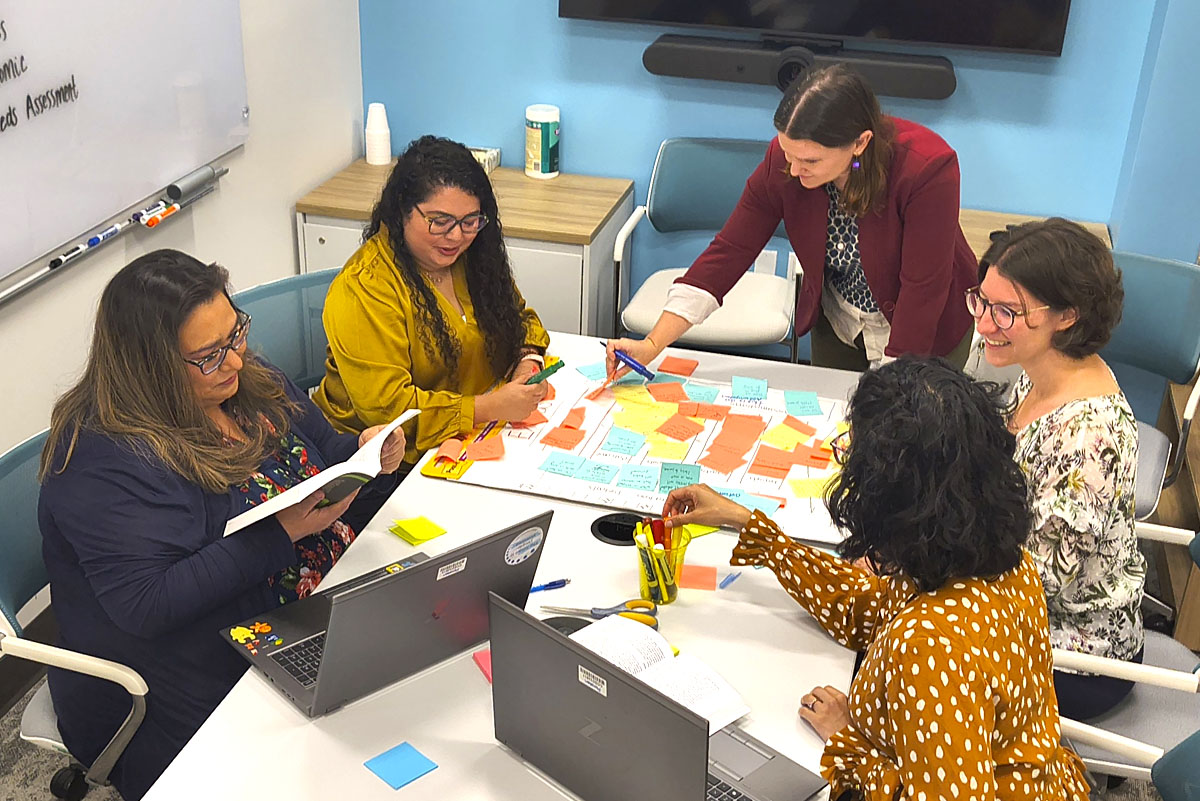
The Office of Evaluation, Performance, and Analytics (OEPA) provides
leadership, coordination, and capacity building around evidence-based
policymaking, program evaluation, performance measurement, and data
analytics.
Our vision: Fostering evidence-based practices and results that matter in support of a County that is effective, efficient, and trusted by the public.
Performance & Evaluation
- Answers critical questions about what works and what can be improved in the County’s programs and service delivery
-
Monitors, reviews, and reports information on system-level indicators of the County’s strategic priorities

Data & Analytics
- Provides specialized data and analytics services to support OEPA and other County departments
- Ensures responsible data use, including security, confidentiality, and governance
- Data management - develops and maintains OEPA’s data and analytics infrastructure
Our Work
County Strategic Key Performance Indicators (KPIs)
The County of San Diego developed 26 Key Performance Indicators
(KPIs) to track progress toward organizational priorities and provide
a snapshot of impactful areas of County work.
County Data Portal
OEPA manages the County Data Portal in collaboration with the County Technology Office (CTO) and all County business groups.
Annual Strategic Research Plan
The Annual Strategic Research Plan (Plan) was updated in 2025. It outlines research and evaluation projects and priority questions that guide OEPA’s efforts over the next several years.
Some of Our Current Projects
-
Guaranteed Income as a Prevention Strategy in Child Welfare
Evaluation of the Family Income for Empowerment Program (FIEP)
The Family Income for Empowerment Program is a lottery-based, guaranteed income pilot led by the Health and Human Services Agency’s (HHSA) Child and Family Well-Being department and implemented with Jewish Family Service of San Diego. The program provides direct cash payments to 452 low-income families who have had prior involvement with the County’s child welfare system. The evaluation includes a causal impact study on future child welfare involvement and well-being outcomes, a process evaluation to inform improvements, and a cost analysis to assess fiscal implications for the County.
What we will learn: This study will assess whether guaranteed income reduces recurrence of child abuse or neglect, improves quality of life for participating families, and offers a cost-effective model for prevention.
Report expected 2027.
-
Collaborative Governance Models to Build Trust and Advance Climate Efforts
Evaluation of the Environmental Justice Workgroup
The Environmental Justice Workgroup was launched in 2025 by the Land Use and Environmental Group’s (LUEG) Office of Sustainability and Environmental Justice. The group was created to build trust between community members and local government by fostering authentic relationships and shared leadership in addressing climate injustices. The group includes 21 members representing Tribal communities, youth, academics, residents, and community-based organizations from across the region. Through ongoing collaboration, shared learning, and co-developed strategies, the Workgroup aims to create a foundation for more inclusive and equitable environmental decision-making.
What we will learn: This evaluation will explore how well the Environmental Justice Workgroup model fosters trust, supports sustained and meaningful collaboration, and contributes to more equitable outcomes in environmental governance throughout San Diego County.
Report expected 2026.
-
Rental Subsidies as a Homeless Prevention Tool for Older Adults
Evaluation of the Shallow Rental Subsidy Program (SRSP)
This study evaluates the causal impact of the Shallow Rental Subsidy Program, a pilot offering $500 per month rent subsidies and light-touch case management to low-income older adults who struggle to pay rent. Among 1,133 eligible households, 382 were selected through a random lottery to receive the subsidy for 18 to 30 months. This pilot is being implemented in collaboration with the HHSA’s Office of Homeless Solutions and Equitable Social Solutions.
What we will learn: Through this study, we will learn whether this type of intervention reduces homelessness risk and improves housing stability, especially for low-income older adults. Subsidies are set to conclude by June 2026.
Report expected 2026-2027.
-
Testing an Equity-Centered Evaluation Framework in County Practice
The County is piloting a new evaluation framework to better understand how equity is incorporated into programs and services. This effort is led by the Finance and General Government Group’s (FG3) Office of Equity and Racial Justice. The framework will assess how well programs adapt to meet the needs of different groups. It will recommend ways to apply an equity lens to evaluation, such as centering the stories of people impacted by a program or providing opportunities for community members and the County to partner on evaluations. This effort is part of a larger collaborative with the Government Alliance on Race and Equity and is being co-created with 23 other local jurisdictions.
What we will learn: This project will assess whether the County’s new approach helps departments apply an “equity lens” to more meaningfully plan and evaluate their work. If successful, the framework will enable stronger integration of community knowledge and power-sharing to make programs effective for the communities they serve.
Report expected 2025.
-
Alternatives to Jail for Low-Level and Behavioral Health Cases
Evaluation of the Alternatives to Incarceration (ATI) Initiative
The Alternatives to Incarceration initiative is led by the Public Safety Group (PSG). It seeks to keep people who do not pose a public safety threat from going to or returning to jail. The initiative does this by expanding the use of community-based services and transitional supports for people reentering communities after being in jail. The evaluation focuses on how the collaborative initiative is designed and implemented. It assesses utilization and effectiveness of services across different groups of people, with special attention equity in service delivery.
What we will learn: This Learning Activity will help determine whether Alternatives to Incarceration efforts are appropriately designed, equitably implemented, and if they are effective in addressing the needs of the focus population and reducing recidivism rates. The study will also lay the groundwork for future impact studies.
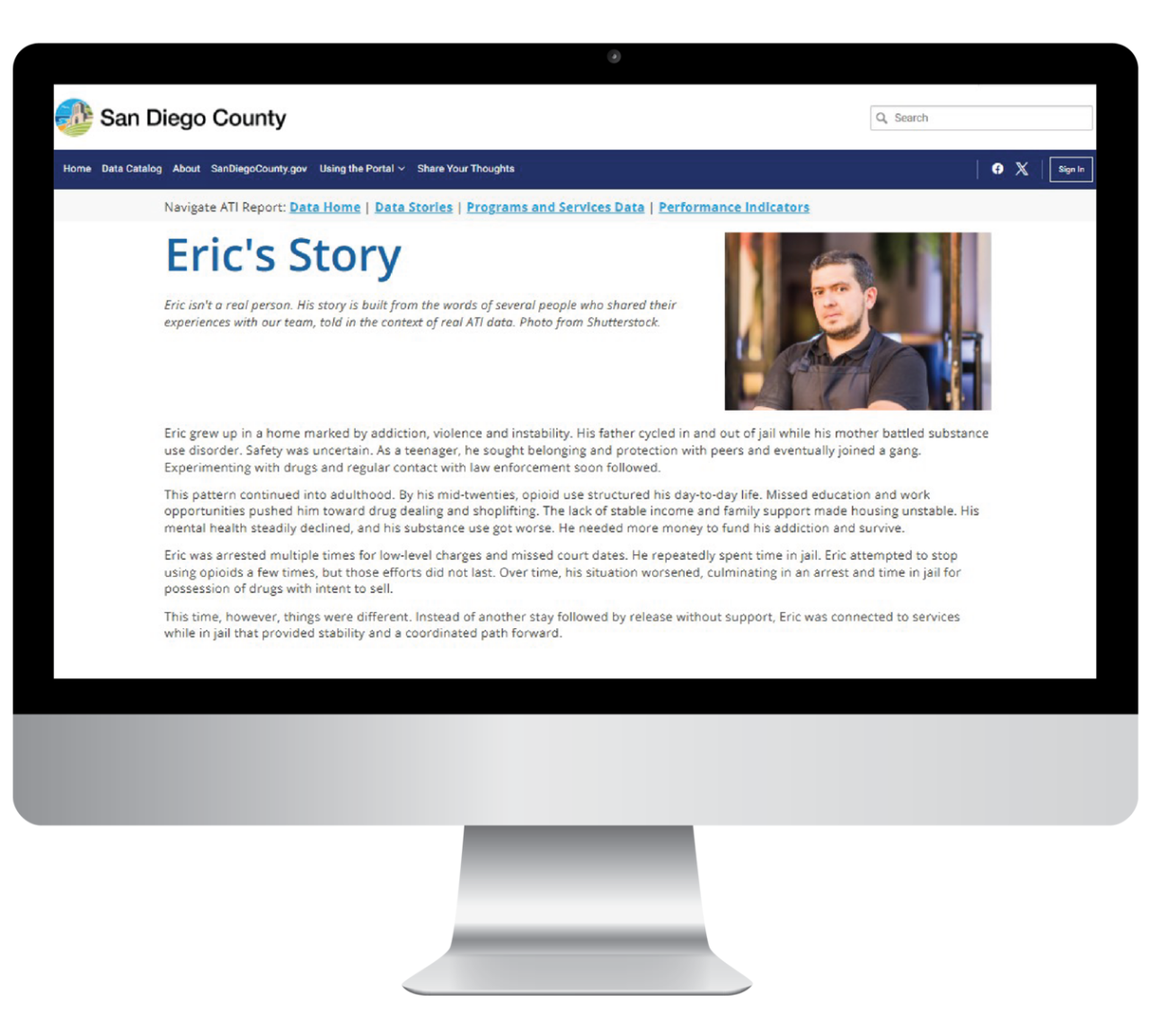
First data published April 2026 and ongoing updates planned. Explore ATI data and stories.
-
Evaluation of Climate Action Plan Strategies
OEPA is partnering with the County of San Diego’s Planning and Development Services, the Massachusetts Institute of Technology’s Abdul Latif Jameel Poverty Action Lab, and the University of California San Diego to design and implement randomized experiments to evaluate one or more strategies in the County’s Climate Action Plan.
What we will learn: Using a rigorous randomized evaluation design, we will be able to better understand the causal relationship between certain Climate Action Plan efforts, such as installation of electric vehicle charging stations, on greenhouse gas reduction, air quality improvement, green job creation, and equity advancement.
Report tentatively expected 2028.
Completed Projects
In the News
Contact Us
County Administration Center
1600
Pacific Highway, Room 452
San Diego, CA 92101
E-Mail: OEPA@sdcounty.ca.gov


 Helpful Links