Studies
Page originally published 4/23/2026. Last updated 9/29/2026.
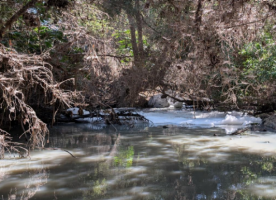
The County of San Diego is working with partners and other agencies to assess concerns and impacts from sewage and pollution in the Tijuana River Valley and surrounding communities.
This includes ongoing work by the County of San Diego and/or other governmental agencies to study potential exposure and health impacts along with efforts to reduce these impacts.
-
CDC Health Survey (CASPER)
On October 17-19, 2024, the Centers for Disease Control and Prevention (CDC) and the County of San Diego completed a survey called a Community Assessment for Public Health Emergency Response, or CASPER. The purpose of this survey was to help public health and emergency response leaders learn more about health concerns and impacts from sewage and pollution in the Tijuana River Valley through face-to-face, household interviews.
-
ATSDR Exposures Survey (ACE)
From October 21 - November 22, 2024, the Centers for Disease Control and Prevention (CDC) Agency for Toxic Substances and Disease Registry (ATSDR) and the County of San Diego conducted an online survey related to sewage and pollution in the Tijuana River Valley. This survey, called an Assessment of Chemical Exposures, or ACE, was another opportunity for people affected to share their experiences and help public health and emergency response leaders better understand the health status and needs in the South Region of San Diego County.
-
ATSDR Public Health Assessment
The Centers for Disease Control and Prevention (CDC)/Agency for Toxic Substances and Disease Registry (ATSDR) conducted public health assessment (PHA) activities to evaluate whether exposure to chemicals in the Tijuana River Valley could harm the health of community members.
-
Feasibility Study (Saturn Boulevard)
In January 2026, the County of San Diego Parks and Recreation Department in partnership with the City of San Diego and United States Navy completed the Saturn Boulevard Feasibility Study.
This study looked at ways to fix water quality and health problems at Saturn Boulevard, where foam and odors from polluted river water splash and mix with the air. The goal of the study was to identify projects that reduce foam and air pollution at Saturn Boulevard without changing the source of pollution (which is outside the study’s scope).
This study identified potential infrastructure solutions to the documented pollution hotspot related to the Tijuana River. It outlined short, mid, and long-term ideas to address the elimination or reduction of the foaming and air quality issues at Saturn Boulevard and reduce the subsequent impacts on public health. As a next step, the County, City, and Navy plan to work together to obtain funding.
For more information, contact Crystal Benham at Crystal.Benham@sdcounty.ca.gov or (619) 539-4155 or Kiran Seibel, at Kiran.Seibel@sdcounty.ca.gov or (619) 209-9922.
-
Exposure Characterization Study
In 2026, the County of San Diego partnered with University of California San Diego for the Tijuana River Valley Chemical Pollution Impact Investigation: Exposure Characterization Study. The purpose of this study is to identify, characterize, and model key atmospheric chemical pollutants of public health concern arising from emissions in the Tijuana River Valley associated with cross-boundary sewage and pollution flow and to provide exposure boundaries and validated modeling tools.
The County intends to use the analysis/results of the exposure study to inform potential subsequent studies.
-
Retrospective Study
The County of San Diego intends to partner through a contractual agreement with an organization for a Retrospective Study to assess whether there is evidence for serious health effects due to past exposure to the emissions from the Tijuana River Valley. The provider may use data sources such as hospital discharge, cancer registry data, and mortality data to identify any exposure-response relationships across areas of generally different exposure, as defined by the Exposure Characterization Study.
-
Long-Term Health Panel Study
Contingent on the availability of additional external funding, the County of San Diego intends to partner with an organization for a Long-Term Epidemiology or Health Panel Study to study the potential effects of consistent exposure to aerosolized sewage and hydrogen sulfide in the Tijuana River Valley community.
If conducted, this study could compare the prevalence of various health conditions across areas of different exposure and across time as exposure changes.
-
Economic Impact Study
The Tijuana River Sewage Crisis Economic Impact Study will look at how ongoing pollution and beach closures affect the region’s economy, environment, and quality of life. This study will capture impacts on local businesses, tourism, residents, property values, and public services through community surveys and data analysis. Findings will help guide future funding, planning, and policy solutions to protect the health and well‑being of communities in the South Bay.
Send an e-mail to the Epidemiology Unit for more information.