




Preventing Zoonotic Diseases
Page last updated 12/31/2025.
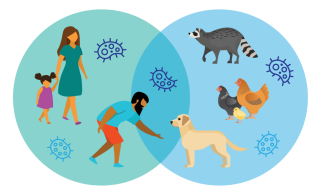
Animals can sometimes carry harmful germs that can spread to people. These are known as zoonotic diseases, or zoonoses. Zoonotic diseases are caused by germs like viruses, bacteria, parasites, and fungi. These germs can cause many different types of illnesses in people and animals, ranging from mild to serious illness, and even death.
Zoonotic diseases are common in the United States and around the world. The Centers for Disease Control and Prevention (CDC) estimates that more than 6 out of every 10 known infectious diseases in people can be spread from animals, and 3 out every 4 new or emerging infectious diseases in people come from animals. Some examples of zoonotic diseases that are priorities in the U.S. are brucellosis, Lyme disease, plague, rabies, salmonellosis, West Nile virus, and zoonotic influenza.
On this page:
- Wash your hands right after being around animals, even if you did not touch the animals.
- Stay healthy around your pets.
- Avoid bites and scratches from animals.
- Prevent bites from mosquitoes, ticks, and fleas.
- Handle food safely – whether it's for yourself, your family, your pet, or other animals.
- Enjoy wildlife from a distance and do not touch wildlife.
- Report a bat found in your home or yard to your local animal control.
Common ways people can get infected with germs that can cause zoonotic diseases include:

Direct contact: Coming into contact with the saliva, blood, urine, mucous, or other bodily fluids of an infected animal. Examples include:
- Petting or touching animals, and
- Bites or scratches.

Indirect Contact: Coming into contact with areas where animals live and roam, or objects or surfaces that have been contaminated with germs. Examples include:
- Aquarium tank water,
- Pet habitats,
- Chicken coops,
- Barns,
- Plants,
- Soil, and
- Pet food and water dishes.

Vector-borne: Being bitten by a tick, or an insect like a mosquito or a flea.

Foodborne: Eating or drinking something unsafe, like:
- Unpasteurized (raw) milk,
- Undercooked meat or eggs, or
- Raw fruits and vegetables that are contaminated with feces from an infected animal.

Waterborne: Drinking or coming in contact with water that has been contaminated with urine or feces from an infected animal.
Contact the San Diego One Health Epidemiology Program through our contact form, via e-mail at phs.ohep.hhsa@sdcounty.ca.gov, or call the Epidemiology Unit at (619) 692-8499, for more information.

 Popular Services