




Data and Insights
San Diego County’s Housing Challenge
The County Board of Supervisors has launched many housing initiatives to make it easier for people to build, find, or keep a home. These efforts include using public-owned land for housing, supporting the construction of affordable homes, and streamlining the permitting process so housing can be built faster.
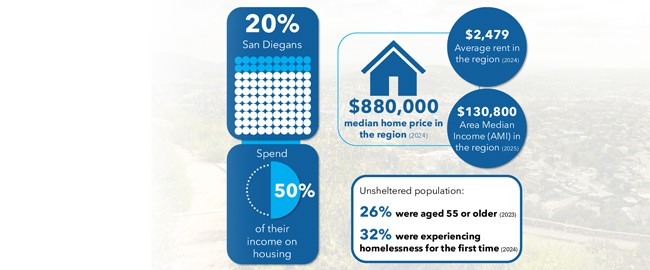
San Diego County is growing, but our housing supply hasn’t kept up. This makes it harder for people to buy a home or find an affordable rental.
- Not enough affordable and attainable homes: We simply don’t have enough affordable and attainable housing to meet demand, especially for middle and lower incomes families.
- Very few vacancies: As of Spring 2025, fewer than 4% of rentals are empty, which means competition is fierce when homes are available. Find more information.
- High costs for families: Nearly half of San Diego households spend more than a third of their income on housing, and many spend over half.
- Instability and homelessness: High rents can contribute to unstable housing situations and contribute to homelessness. Find more information.
- Unconventional dwellings and unpermitted housing: Because of the housing crisis, more people are living in unusual homes that don’t follow safety rules. These places can be dangerous because they might have bugs and lack things like heat, hot water, and working plumbing.

How Many Homes Are Needed?
California sets housing goals for each region through the Regional
Housing Needs Allocation (RHNA). RHNA represents one quantitative
measure of housing need by ensuring that each jurisdiction plans for
its share of housing across all income levels.
Between
2021 and 2029, San Diego County’s goals are to plan for 171,685 new
homes, nearly 99,000 of which need to be affordable for low- and
middle-income families. Each city and the unincorporated county get
their own share of this goal based on existing and projected
population growth, land suitable for development, and community needs.
The County of San Diego is responsible for planning 6,700 new homes in
unincorporated communities (areas outside of incorporated cities). The
County is working to meet these goals. For more information.
Improving Access to Housing
In 2023, the Board of Supervisors directed staff through the Removing Barriers to Housing initiative to adopt 22 actions to deliver housing faster and easier in the unincorporated area. In 2024, the Board also adopted the Climate Action Plan (CAP), which in addition to reducing greenhouse gases in the unincorporated area, streamlines the environmental review (greenhouse gas analysis) for housing. Some key actions include:
Keeping Homes Healthy and Safe
- The County regulates over 1,900 multi-family rental housing complexes, including 77,000 apartment and hotel units, conducting routine inspections and complain investigations. Common violations in this program are related to vermin infestations and poor maintenance of housing units impacting heat, hot water, and plumbing.
Building More Homes
- Creating an Innovative Housing Trust Fund: More than $100 million invested to help finance 3,000 affordable homes (housing units)regionwide.
- Using County-owned land for housing: 11 County properties are being turned into affordable housing to create 1,700 homes for approximately 3,800 residents. Four developments for low-income seniors are already complete.
Opening Housing Opportunities
- Removing barriers: In 2023, the Board adopted 22 actions to speed up housing production, backed by $15 million in funding.
- Updated housing rules: The County has updated zoning and other housing policies to make it easier to build homes, including Accessory Dwelling Units (ADUs).
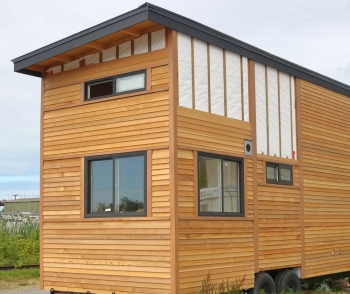
- Allowances for diverse housing: Tiny Homes on Wheels (THOW) can now be permitted as dwellings per the Zoning Ordinance. There are established standards that both allow THOWs to be safely used by community members as a form of housing, while also meeting the requirements of the County Building Code.
Making Housing More Affordable
By allowing variety of housing types, like Tiny Homes on Wheels (THOW) can create more naturally occurring affordable housing.
- Incentives and Policy Updates: Through zoning updates, funding, and flexible programs, the County is working to help lower housing costs for working families and renters.
Preventing Homelessness & Supporting Stability
Through a growing number of programs, the County helps people at risk or experiencing homelessness find stable housing.
- Coordinated Outreach and Case Management: In partnership with local cities and community partners, County outreach staff engage hundreds of unsheltered individuals each month and connect them to housing and services.
-
Compassionate Emergency Housing Solutions: The County has
expanded emergency housing options in unincorporated areas, like new
Safe Parking programs for people experiencing homelessness.
Datasets & Dashboards
Making Housing More Affordable: Explore housing data and dashboards that track progress on affordable housing, development and reducing homelessness across the County.
- General Plan Annual Progress Reports from 2012–2025. Include progress toward RHNA targets, housing production totals, and implementation status.
Affordable Housing
County-Restricted Affordable Housing Map
- Map displaying all of the affordable housing developments partially funded by the County of San Diego that offer rent-restricted housing for people who qualify under a variety of programs and income levels. The map differentiates between Existing and Under Construction developments and includes information on total units, income levels, eligible populations, and the development webpage.
Affordable Housing on County-Owned Land
- Affordable housing developments on surplus County-owned land, both constructed and in the pipeline.
County of San Diego Affordable Housing Inventory
- The dashboard highlights the County of San Diego’s affordable housing inventory, including Permanent Supportive Housing (PSH) categorized by housing status. It shows development and unit counts across key stages—from pipeline to existing—offering a clear view of progress and overall inventory.
Housing Development
County of San Diego Housing Dashboard (unincorporated area)
- This dashboard shows key housing production metrics for the unincorporated area by year (starting in 2024). Within the dashboard, the data can be filtered by year, Supervisorial district, and housing type. Additionally, information shown in the charts is interactive and can be clicked on to show further insights.
Homelessness
Office of Homeless Solutions Program Dashboards
- The dashboard highlights the direct services and programs offered by Office of Homeless Solutions
Homelessness Action Plan Dashboard
- The dashboard includes collective impact outcomes for the County’s homelessness programs.