




Mosquito larvicides for home use
Young mosquitoes, or larvae, live and grow in standing water. Larvicides are products that target mosquito larvae in the water and prevent them from growing into biting adults. Adding larvicides to standing water can reduce mosquito problems and prevent the spread of mosquito-borne diseases.
Larvicides can be used to reduce mosquitoes growing in rain barrels, ponds, fountains, and any container that can hold water. When used as directed, larvicides are safe for people, pets, and wildlife. Some larvicides are even approved for use in organic gardens. Always carefully read and follow all instructions and precautions on the product label.
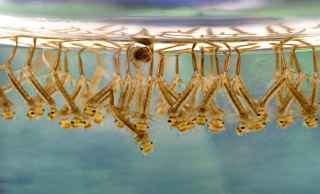
When and where to use mosquito larvicides
Larvicides are a great way to reduce numbers of mosquito larvae, but they do need to reapplied weekly to monthly depending on the product. Before treating water with a mosquito larvicide, consider the following:
- Can the water be dumped out or drained instead? - Dumping out water and preventing it from collecting is the simplest way to prevent mosquito breeding.
- Can mosquitoes be prevented with screen or lids? - A lid or screen that stops a mosquito from laying eggs in the water can be a more permanent solution than using a larvicide.
- Can mosquitofish be added to the water? - These fish will eat any mosquito larvae in the water and won't need to be re-applied like a larvicide. Mosquitofish are a good option for artificial ponds and pools. Click here to find out more about mosquitofish.
Choose the method that will be easiest to maintain for you. Below are several examples of places our experts recommend using larvicides and tips for getting the best results.
| Mosquito breeding source | Tips |
|---|---|
| Bromeliads | Treat the water collected between the leaves of bromeliad plants with a liquid larvicide. |
| Fountains | Keep the fountain running or add larvicide to prevent breeding. |
| Ponds/unmaintained pools | Use larvicide for temporary mosquito control. Mosquitofish are best for longer term control. |
| Rain barrels | Use a long lasting bacterial larvicide in briquette or tablet form. |
| Saucers under potted plants (and other small sources) | Use a granular larvicide to treat small containers. |
| Yard drains | If drains are holding water, use a fine mesh screen over openings to keep mosquitoes out, or add a granular larvicide to standing water. |
Bacterial larvicides
Bacterial larvicides are made of different natural bacteria that kill mosquito larvae but don't harm people, pets, plants, or wildlife. They are available to purchase in hardware and garden stores in many different forms including briquettes, granules, liquids, tablets, and pellets. Look for one of the active ingredients below.
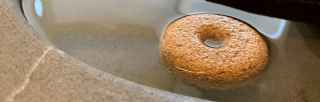
Bacillus thuringiensis subspecies israelensis (Bti)
Bti is a naturally occurring bacteria found in soils. It contains spores that kill mosquito larvae (and blackfly and fungus gnat larvae), but is harmless to other living things including animals, plants, and people. Bti is very effective in reducing mosquito larval populations.
Environmental Protection Agency (EPA) information about the safety of Bti.
Bacillus (or Lysinibacillus) sphaericus (B. sphaericus)
B. sphaericus is another type of naturally occurring bacteria that is effective against mosquitoes. It can be more effective than Bti in controlling mosquitos in water where there is a lot of organic material such as wastewater ponds, animal waste ponds, and septic tanks.
Other larvicides
Methoprene
Methoprene is an insect growth regulator. It disrupts the mosquito life cycle and prevents mosquito larvae from becoming adults. You may still see larvae as the product does not kill them right away, but they will not survive to adulthood. Methoprene comes in a granular or pellet form and is applied directly to the water where mosquito larvae are found.
 858-694-2888

 Popular Services


