




Curbing Vehicle Miles Traveled to Reduce Greenhouse Gas Emissions
11/19/25
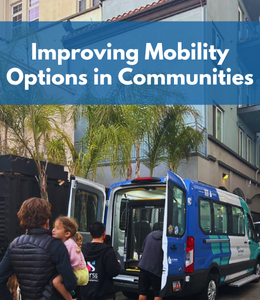
The County’s Climate Action Plan (CAP) seeks to reduce vehicle miles traveled (VMT) and greenhouse gas (GHG) emissions. CAP Action T-6.3 focuses on increasing access to first- and last-mile (FM/LM) transportation services and connections, such as neighborhood electric vehicles, microtransit, and bike- or scooter-share programs, to reduce VMT in the unincorporated area by 7% by 2030. This is a critical step, as the Built Environment and Transportation sector is the largest source of GHGs in the unincorporated area.
FM/LM services can help bridge the gap between a person's origin and the nearest transportation hub or other destination. FM/LM services can encourage the use of public transit and help residents switch from driving alone in their car for every trip, which is key to reducing VMTs. Bridging the FM/LM gap is integral to wider transit adoption, especially in areas with lower density or where inadequate infrastructure, like limited sidewalks or bike lanes, may create significant mobility challenges for residents. In areas with less public transit, FM/LM services help residents travel to destinations within their community.
To support implementation of FM/LM services, the County is kicking off a new project: Planning for FM/LM Transportation Solutions in Unincorporated San Diego County Villages. Funded by the California Department of Transportation’s Sustainable Transportation Planning Grant Program, this effort will assess the mobility needs and travel barriers across unincorporated area Villages and evaluate potential FM/LM services for future deployment.
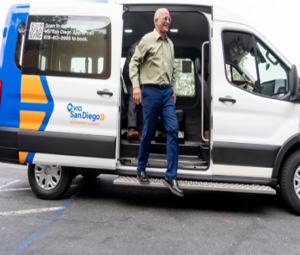
On-demand microtransit services are one type of FM/LM transportation solutions—flexible, shared rides within a defined area that operate similarly to ride-hailing services like Uber, but with a focus on public transit and zero-emission mobility. Locally, bordering Spring Valley, Southeastern Connect, a SANDAG and Urban Collaborative Project CDC partnership, offers sustainable connections to key destinations in the Mount Hope, Chollas View, and Emerald Hills neighborhoods of the City of San Diego. A similar microtransit service for the Fallbrook-Pala region is currently being planned by the North County Transit District (NCTD) as part of the NCTD+ Microtransit Pilot Program. The pilot is scheduled for a 2026 launch, dependent on securing funding.
By improving connections to transit and other community services, these services can make sustainable travel more convenient and accessible for residents, promote the use of zero-emission mobility options, and advance regional goals toward a cleaner, more connected future.
To stay up to date with CAP initiatives, please visit the CAP website, sign up for our monthly newsletter, and follow us on Facebook, Instagram, and X.


 Climate Action Links