




Species Spotlight: Golden Eagle
01/21/26

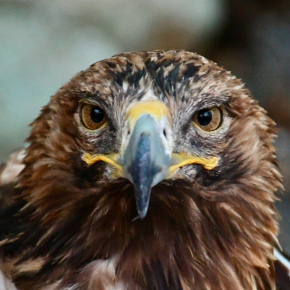
The golden eagle is one of North America’s largest
and most iconic birds. In San Diego County, this powerful raptor
inhabits vast, rugged landscapes and plays a key role in keeping
ecosystems healthy. Because of its sensitivity to habitat changes and
increasing conservation concerns, the golden eagle is a protected
species under the County of San Diego’s (County’s) Multiple Species
Conservation Program (MSCP) South County Subarea Plan. This plan protects
San Diego’s native plants and animals by conserving large, connected
preserve areas through land acquisition and management.
Habitat and Biology
Golden eagles are found throughout western North America and inhabit diverse habitats in San Diego County, including grasslands, shrublands, oak woodlands, forests, and canyon systems. Although most of the coastal areas are heavily developed, these eagles can still be seen in the foothills, canyons, and mountainous regions of the county.
Golden eagles have been documented in seven County Preserves:
- Barnett Ranch Preserve
- Del Dios Highlands Preserve
- El Capitan Preserve
- Otay Ranch Preserve (limited access)
- Ramona Grasslands Preserve
- Skyline Preserve (limited access)
- Sycamore Canyon and Goodan Ranch Preserve
To minimize disturbance near nesting areas, seasonal trail closures are used in some preserves. For example, a trail in the northwest part of the Ramona Grasslands Preserve is only open during the non-breeding season (August–November) and closed the rest of the year to protect nesting eagles.
Most golden eagles in California are year-round residents. In San Diego County, individuals typically remain within established territories and may shift to lower or higher elevations seasonally rather than migrate long distances. Courtship and nest building can begin as early as fall, with breeding activity extending from late January through August. Nests are usually built on cliff ledges or placed in large trees (most commonly oak species). Eagles generally lay one to three eggs, typically in February.
Golden eagles mainly prey on mammals like ground squirrels, jackrabbits, and cottontail rabbits. Because they wander widely while hunting, golden eagles have some of the biggest home ranges of any bird species in the area and need large, connected habitat patches for nesting and feeding. Thus, the South County Subarea Plan emphasizes conserving large habitat networks to support wide-ranging species such as golden eagles, particularly by protecting foraging areas near nesting sites.
Threats and Conservation Considerations

Golden eagles face a variety of threats that can affect their ability to successfully nest and forage in the region. These include the loss and fragmentation of nesting and foraging habitat, increasing urbanization and associated human disturbance, and declines in key prey species.
Climate-related stressors, such as more frequent heat waves, prolonged droughts, wildfires, and extreme rainfall events, also present increasing challenges. Climate change impacts breeding success by increasing heat stress on nestlings, decreasing prey availability during drought conditions, and causing the loss of large nest trees due to disease, insects, and water stress.
Because golden eagles react strongly to fluctuations in prey availability, habitat quality, and human disturbance, they are considered a key indicator species for ecosystem health on a landscape scale. These factors highlight the need for ongoing monitoring, habitat preservation, and disturbance control to maintain the long-term resilience of this top predator.
To learn more about the County’s efforts to protect the golden eagle, you can check out the latest MSCP South County Subarea Plan Annual Report.


 Climate Action Links