




Candida auris (C. auris)
Page last updated 8/5/2026.

Candida auris (C. auris), also known as Candidozyma auris, is a type of yeast that can cause serious infections and spread easily among very sick patients in healthcare facilities. C. auris is often multidrug-resistant, meaning that these illnesses may no longer respond to the medicines used to treat them.
Patients and Caregivers:
- Keep your hands clean, particularly before and after caring for wounds or touching a medical device.
- Remind people (including healthcare providers) to clean their hands before touching the patient or handling medical devices.
- Allow healthcare staff to clean the room daily when in a healthcare setting.
- Take medication as prescribed by your healthcare provider.
- Follow patient safety tips in healthcare settings.
For Healthcare Facilities and Infection Preventionists:
- Follow standard hand hygiene practices.
- Use Contact Precautions or Enhanced Barrier Precautions (EBP) based on the facility/setting.
- Follow the recommended Public Health general cohort guidance and Skilled Nursing Facility cohort guidance as applicable.
- Regularly and thoroughly clean and disinfect the patient care environment and equipment with an EPA List P disinfectant with 5 minutes or less contact time.
- Use an interfacility transfer communication tool when transferring a patient between healthcare facilities to communicate MDRO history.
- Notify the HAI Program upon transfer to another healthcare facility or discharge home.
- Screen high-risk patients.
- Laboratory surveillance.
Public Health Guidance
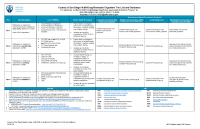
MDRO Tier Document
This document provides guidance on public health action, transmission precautions, and public health priorities.
Transmission can occur from contact with infected patients or contaminated surfaces and equipment.
- Patients with C. auris often transfer it onto surfaces and objects in healthcare settings like bedrails, doorknobs, and blood pressure cuffs.
- C. auris can survive on surfaces and objects for a long time and spread to other patients who can then become sick .
-
C. auris can remain on a patient's skin or body for a long
time, even if they show no symptoms. During this time, a patient may
continue to spread C. auris.
Healthcare workers often use personal protective equipment (e.g. gowns and gloves) when caring for patients with C. auris.
Who is at risk?
Patients in healthcare settings are most at risk for C. auris, especially those who:
- Require medical devices like breathing machines, bladder catheters, or I.V. catheters.
- Are taking long courses of certain antifungal medications.
- Have wounds requiring treatment.
- Have weakened immune systems.
Medical devices such as those listed above are often necessary but create pathways for C. auris to get into the body.
Who is not at risk?
Healthy people usually do not get C. auris infections.
People who do not have these risk factors generally do not carry or become sick from C. auris. This includes healthcare providers and visitors. Most of the time, it is unnecessary to screen or test healthcare providers and family members.
C. auris symptoms can vary depending on the site of the infection (e.g., blood, wounds, or other parts of the body).
In some cases, people can carry C. auris without having an
infection, this is known as colonization. Colonization means that the
organism is found in or on the body, but it is not causing any
symptoms. C. auris can colonize many body sites, including
the skin, respiratory tract, wounds, and urinary tract. Patients can
remain colonized for several weeks, months, or longer, even if they
never show symptoms.
C. auris is diagnosed through laboratory testing. This can occur through screening or cultures to identify those who are colonized or have an infection. The healthcare provider will determine which testing method is appropriate for each patient.
If someone has an infection, the provider should decide the right antifungal treatment. Some C. auris infections are resistant to multiple antifungal medications and it may be necessary to consult with an infectious disease specialist.
If someone is colonized, treatment is usually not recommended.
County of San Diego

Candida Auris (C. auris) Frequently Asked Questions for Patients and Family Members
English | معلومات باللغة العربية (Arabic) | 中文信息 (Chinese) | علومات به زبان دری (Dari) | فارسی (Farsi) | 한국어 정보 (Korean) | Macluumaad Af-Soomaali ah (Somali) | Español (Spanish) | Impormasyon sa Tagalog (Tagalog) | Thông Tin Bằng Tiếng Việt (Vietnamese)

Candida Auris (C. auris) What Healthcare Staff Should Know
English | معلومات باللغة العربية (Arabic) | 中文信息 (Chinese) | علومات به زبان دری (Dari) | فارسی (Farsi) | 한국어 정보 (Korean) | Macluumaad Af-Soomaali ah (Somali) | Español (Spanish) | Impormasyon sa Tagalog (Tagalog) | Thông Tin Bằng Tiếng Việt (Vietnamese)
California Department of Public Health (CDPH)
Centers for Disease Control and Prevention (CDC)

Contact the San Diego Healthcare-Associated Infections Program through our contact form, via e-mail, or call the Epidemiology Unit at (619) 692-8499.


 Popular Services