




Naloxone Distribution Impact and Achievements
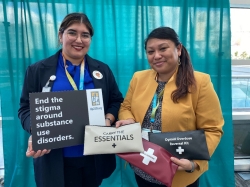
County Behavioral Health Services is committed to providing more
access to naloxone across San Diego County. We know from research
that communities with greater naloxone distribution have lower rates
of opioid overdose deaths. We want naloxone access to be easy for
everyone, and especially for those at high risk for witnessing or
experiencing an overdose.
Naloxone is available through multiple County-supported distribution pathways, outreach teams, and community partners. As part of this, we partner with over 100 community organizations to maximize our reach, including libraries, food pantries, farmers markets, colleges, and community centers.
We use data to inform our efforts and focus on priority populations. For example, in 2025, Black/African American San Diego residents had the highest opioid overdose mortality rate compared to residents of all other racial or ethnic groups. Project AWARE is a new training partner focusing on outreach to Black/African American residents, as well as other groups.
Distribution By the Numbers
In 2025, 82,000 naloxone kits were distributed to naloxone
distribution network providers. We have also contracted with three
organizations to train people on naloxone throughout the
County.
Project AWARE reported an increase of more than 3000% in naloxone kit distribution:
- 12 kits were distributed from February to June 2025, compared to 391 kits during October 2025 to February 2026.
- From
October 2025 to February 2026, Project AWARE was also responsible
for reaching nearly 30% of all Black/African American individuals
served by the County’s naloxone program.
Our Commitment
Although overdose deaths in the County have been decreasing overall, there is still a lot of work to be done, and many more deaths to be prevented. We remain dedicated to continuing to expand access to free naloxone across the County to support the health and well-being of our communities.
Read the County’s Comprehensive Harm Reduction Strategy to learn more about our approach and strategies.
Frequently Asked Questions
-
What is the County’s NDP?
The County’s Naloxone Distribution Project (NDP) is a network of providers who receive free naloxone from Behavioral Health Services and distribute throughout the County.
-
Why is naloxone distribution a County priority?
Naloxone distribution is a County priority because it is an effective tool to prevent opioid overdose deaths. We know from research that communities with greater naloxone distribution have lower rates of opioid overdose deaths. Naloxone is a key part of the County’s strategy to reduce overdose deaths.
-
How many kits has the County distributed?
In 2025, 82,000 naloxone kits were distributed to naloxone distribution network providers.
-
Who received naloxone through the NDP?
Over 100 community organizations receive free naloxone from the County through the NDP, including libraries, food pantries, farmers markets, colleges, and community centers. These organizations in turn distribute the naloxone widely, including to those at highest risk of experiencing an overdose, including people who use drugs and people experiencing homelessness.
-
How does the County decide where naloxone goes?
This is based on several factors, including data (where need is highest), and interest from organizations in partnering with the County.
-
How is naloxone ordered by partners?
If you would like to become a provider and distributor of naloxone within your community, please email harmreduction@sdcounty.ca.gov to obtain information on becoming a Naloxone Distribution Program partner.
-
How is inventory and distribution monitored?
BHS team members track all outgoing naloxone distributions to community partners and monitor each partner’s compliance with required data‑submission processes.
-
How is training provided?
The County is contracted with three organizations to train people on naloxone throughout the County.
-
Where can the public access naloxone?
To search by zip code and see a comprehensive map of where naloxone is available, visit San Diego Opioid Project. You can also call 2-1-1 to find the naloxone pick-up location closest to you or visit our webpage.
 Quick Links