




Best Management Practices (BMPs) for Beekeeping
Beekeeping BMPs Video & Checklist
-
Video on Beekeeping
BMPs
- A video series about Beekeeping Best Management Practices in San Diego County, on the University of California Cooperative Extenstion website.
-
Checklist on
Beekeeping BMPs
- Recommended for all beekeepers and required for beekeepers with locations in the unincorporated area of San Diego County.
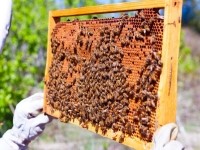
Apiary Tier Level and Colony Placement
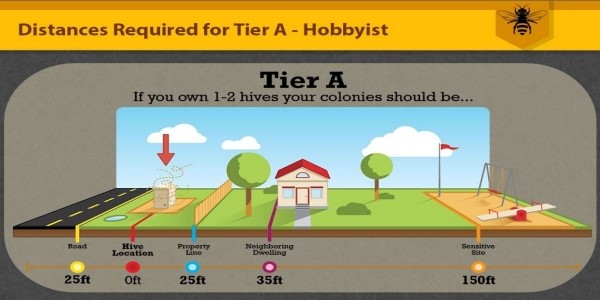
Tier A: 1-2 colonies per location
Bee colonies must be:
- 25 feet or more from the road
- 25 feet or more from the property line
- 35 feet or more from a neighbor's dwelling
- 150 feet or more from the property line of sensitive sites
Tier B: 3-10 Colonies per Location
Bee colonies must be:
- 50 feet or more from the road
- 50 feet or more from the property line
- 100 feet or more from a neighbor's dwelling
- 150 feet or more from the property line of sensitive sites
Tier B: 11-20 Colonies per Location
Bee colonies must be:
- 50 feet or more from the road
- 50 feet or more from the property line
- 100 feet or more from a neighbor's dwelling
- 300 feet or more from the property line of sensitive sites
Tier C: More than 20 Colonies per Location
Bee colonies must be:
- 100 feet or more from the road
- 300 feet or more from a neighbor's dwelling
- 450 feet or more from the property line of sensitive sites.
Identification of Hives
Hives located in unincorporated areas of San Diego County shall be identified with:
- Beekeeper’s name and telephone number
- Black letters
- At least one inch high on a background of contrasting color
This information helps apiary inspectors, pesticide applicators, and first responders contact the beekeeper.

Water Supply
Beekeepers with bee colonies located in unincorporated areas of San Diego County shall maintain an adequate and accessible supply of fresh water for bees to use at all times. If an apiary location does not contain sufficient natural water, the beekeeper shall provide water source with landing sites for honey bees to forage without drowning.

Fire Prevention
Firebreak
Beekeepers should maintain the area immediately surrounding the hives out to ten feet cleared to bare earth and free from all other combustible material. All combustible vegetation ten to thirty feet surrounding the hives should be maintained to a height of six inches above the ground or less. A path used by motor vehicle to get to an apiary location should also have all combustible vegetation on the path maintained to a height of six inches above the ground or less.
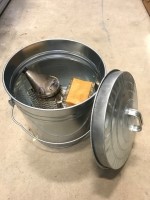
Bee Smoker Safety
Bee smoker should have a noncombustible smoker plug and should be carried in noncombustible secondary container with secured lid. During vehicle transport of bee smoker with burning or smoldering substances, smoker should be placed in noncombustible container with lid fastened closed. After use, all burning or smoldering substances in bee smoker should be extinguished.
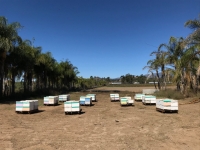
Flyover Barrier
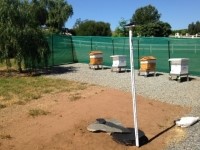
Apiaries in Tier A or B in a residential area within 300 feet of neighboring dwellings shall maintain a six-foot vertical flyover barrier. A flyover barrier directs bees' flight path upward to prevent bees from flying at a height where they could intersect with a person or animal in a neighboring property. The barrier is a solid wall, fence, dense vegetation, or any combination thereof that provides an obstruction through which honey bees cannot readily fly. Property line fences or barriers do not constitute flyover barriers.




 Popular Services