




Why Green Streets?
The Stormwater Pollution Problem
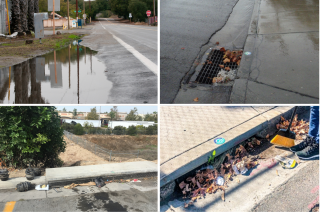
When it rains, water runs off streets and sidewalks into ditches, gutters, and storm drains. Along the way, it picks up oil, trash, metals, and other pollutants. This runoff doesn’t just disappear—it flows into our streams, rivers, reservoirs, beaches, and eventually, the ocean.
Even on sunny days, water from car washing, irrigation, and other dry-weather runoff can carry pollutants into the same storm drains, affecting local waterways year-round.
The Solution: Nature at the Curb
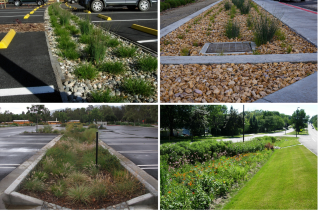
Green Streets are designed to bring nature back into our roadways. Using plants, trees, and soil, these systems slow down and filter runoff, removing pollutants before the water reaches our creeks and rivers.
Some systems are visible — like vegetated curb extensions, tree wells, and landscaped medians — while others work quietly underground. Together, they form a cleaner, greener network that help manage stormwater naturally.
What is the Green Streets Clean Water Plan?
A Vision...
The County of San Diego Green Streets Clean Water Program evaluated nearly 1,200 miles of roads in the unincorporated area, looking for opportunities to use green street retrofits to support clean water in local creeks, rivers, lakes, and ultimately the ocean.
An Opportunity...
The Green Streets Clean Water Plan identified the highest priority multi-benefit locations for green streets across 24 community planning areas. Local community benefits that were considered include supporting aquifer recharge, improving pedestrian safety, and enhancing green spaces.
A Plan
Policy recommendations are "paving the way" for future green street opportunities.
A Plan in Motion
The County has already implemented several projects identified in the Green Streets Clean Water Plan. Visit the Green Infrastructure Projects to learn more.

Frequently Asked Questions:
-
1) Is there a list available of project areas currently under
consideration for green streets?
Priority drainage areas and candidate project sites are provided in the Green Streets Clean Water Plan. Information on projects sponsored by the Watershed Protection Program can be found on the County's Green Infrastructure page.
-
2) The Mapleview Green Street Project was described during the Green
Streets Clean Water Webinar. Is it one of the 30 projects included in
the Green Streets Clean Water Plan?
No, it is not one of the 30 projects listed in Green Streets Clean Water Plan. Construction of the Mapleview Green Street Project is is scheduled for the spring of 2022.
-
3) Will all medians be raised and landscaped?
The incorporation of raised medians on County road projects depends on a number of factors including road classification, traffic movement, and traffic safety. In most cases raised medians are not vegetated. The use of raised medians with vegetation will be considered on green street projects, but only when a substantial water quality benefit can be achieved. Specific project design will be presented to the community similar to any Capital Improvement Program project.
-
4) How do trees help treat stormwater runoff?
Tree root systems help the surrounding soil absorb more rainfall and stormwater runoff by reducing soil compaction. As storm water runoff percolates into the soil, natural processes can filter out pollutants.
-
5) How will vegetation be irrigated?
Irrigation requirements would depend on the type of vegetation proposed and availability of water. If irrigation is needed, it will be installed consistent with the County's Water-Efficient Landscape Design Manual. Specific project design will be presented to the community similar to any Capital Improvement Program project.
-
6) Will traffic calming mean reduced lanes? What if the community does
not like reduced lanes?
Traffic calming can be accomplished through a number of different measures without resorting to the reduction of traffic lanes. Any of the proposed traffic calming measures will be communicated to the community and presented to the local Community Planning Group.
-
7) Are Type IV (protected) bike lanes under consideration for the
Mapleview project or any of these other projects?
Type IV bike lanes are not included as part of the Mapleview Project. Fitting Type IV bike lanes into existing roadways can be challenging due to the limited space within the existing built environment and right-of-way. If a green street project is proposed in an area identified for Type IV bike lanes in the County's Active Transportation Plan, the bike lane opportunity will be considered along with other priorities for that specific project.
-
8) Will tree wells be designed so that the trees will not buckle
pavement as they mature?
The County's Green Streets Standard Drawings include design specifications for tree wells and biofiltration media. They include design features that direct roots downward, rather than horizontally, in an effort to avoid impacts to sidewalks and roadways. These design specifications provide sufficient volume for root establishment and runoff storage. Trees should be able to reach their natural heights.
-
9) Could this program create a vector control problem by allowing
standing or ponded water and thus breeding of mosquitos?
Projects will be designed to avoid the ponding of water. The County's Green Streets Standard Drawings, which will be used for this project, intentionally limit the depth of ponded water and require efficient drain times to avoid becoming a breeding environment. Projects with underdrains will provide a backup mechanism for collected runoff to exit the treatment systems to ensure that ponding will not occur.
-
10) How are these projects funded?
Green Infrastructure projects are primarily funded through the County general fund and supplemented with water quality grants.
-
11) What jobs will this program create? Are they long-term or for
construction only?
There will be short-term construction jobs associated with these green street projects. The improvements and aesthetically pleasing features that these projects include could offer long-term job benefits as well, if they bring more visitors to the local community. Maintenance work on green street features will also be needed.
-
12) Who will maintain the landscaping?
There could be more than one entity involved in landscape maintenance. The County's Department of Public Works is responsible for ensuring that landscaping in the right-of-way is maintained, either through the use of County Road Crews or a landscape contractor.
-
13) Where will the funding come from to maintain the landscaping?
County general fund is currently identified as the funding source for green street projects. The County plans to use drought-tolerant, native, and non-invasive plant species in landscaped areas. These plants, once established, may be less costly to maintain and irrigate.
-
14) How will water supply concerns be considered for vegetated green
streets that require irrigation?
Vegetated green street projects will be landscaped using drought-tolerant, non-invasive vegetation, with a preference for native species. Such plants will require some supplemental water when first established, with the goal of transitioning away from irrigation over the long-term. Additionally, green street projects are intentionally sited and designed to receive runoff from roads, curbs/gutters, and sidewalks during both dry weather (from sources such as over-irrigation) and wet weather. This will further offset the demand for irrigation.
-
15) How will green street projects impact residential street
right-of-way frontages that a homeowner may have landscaped themselves?
While the majority of projects will be located outside of residential areas, the County recognizes that residents are invested in the condition of the right-of-way adjacent to their property, and understand that some right-of-way areas have been landscaped. If a project is planned in such a location, the County will take this into consideration during the design phase. In cases where prior landscaping necessitates removal, replacement landscaping would be designed to be aesthetically pleasing, pollinator friendly, etc.
-
16) Is proximity to schools being considered in the placement of green
street projects?
Proximity to schools is one of many factors considered in the overall scoring of potential green street projects.

The Green Streets Clean Water Plan is funded by the County of San Diego's Watershed Protection Program, which works to prevent pollutants from entering our waterways.

Sign up for the Green Infrastructure Newsletter
Learn how Green Infrastructure is used in the Green Streets Clean Water Plan
Return to the Watershed Protection Program Home Page


 Popular Services