




Respiratory Syncytial Virus (RSV)
Page last updated 9/2/2026.
The County of San Diego is dedicated to preventing vaccine-preventable diseases by following the West Coast Health Alliance’s (WCHA) recommendations for vaccinations based on credible, transparent, and science-based evidence.

Respiratory Syncytial Infection, or RSV, is a common respiratory virus that usually causes mild, cold-like symptoms.
RSV can be dangerous for infants and older adults. It is the most common cause of bronchiolitis (inflammation of the small airways in the lung) and pneumonia (infection of the lungs) in children younger than 1 year of age in the United States. RSV can also make chronic health problems worse.
On this page:
Vaccines can help protect older adults from getting very sick from RSV. People who are pregnant can get the vaccine to help protect their babies after they are born. If the vaccine isn’t given during pregnancy, babies and young children can get monoclonal antibodies to help protect them from severe RSV. Most infants will not need both.
-
Infants and Young Children
- 1 dose of nirsevimab (a type of monoclonal antibody), for all infants younger than 8 months of age who were born shortly before, or are entering, their first RSV season (typically fall through spring).
- 1 dose of nirsevimab for infants and children 8-19 months old who are at increased risk for severe RSV disease and entering their second RSV season.
-
Pregnant People
- 1 dose of the RSV vaccine during weeks 32 through 36 of pregnancy, administered September through January.
- The RSV vaccine is not recommended for pregnant people who received it during a previous pregnancy.
-
Adults Aged 60 Years and Older
- 1 dose of the RSV vaccine for everyone ages 75 and older and adults between the ages 50-74 who may be at higher risk for getting very sick from RSV.
- The RSV vaccine is not
currently an annual vaccine, meaning older adults do not need to
get a dose every RSV season.
- If you have already gotten an RSV vaccine, you do not need to get another one now.
Learn more about RSV Immunizations.
RSV can spread when:
- An infected person coughs or sneezes.
- You get virus droplets from a cough or sneeze in your eyes, nose, or mouth.
- You have direct contact with the virus, like kissing the face of a child with RSV.
- You touch a surface that has the virus on it, like a doorknob, and then touch your face before washing your hands.
People with RSV can start spreading the virus a day or two before they feel sick. They usually start to feel sick 4 to 6 days after getting the virus and can spread it to others for 3 to 8 days. But some babies and people with weak immune systems can still spread RSV for up to 4 weeks, even after they stop feeling sick.
Children often catch RSV outside the home, like at school or daycare.
Risk Factors
Many people get RSV for the first time as an infant or toddler. Almost all children have had it by age 2. Most people will get better in a week or two, but RSV can be serious for young children and older adults.
People at highest risk for severe RSV disease include:
- Premature infants.
- Young children with congenital (from birth) heart or chronic lung disease (e.g., asthma).
- Young children with weakened (compromised) immune systems due to a medical condition or medical treatment.
- Children with neuromuscular disorders.
- Adults with weakened (compromised) immune systems.
- Older adults, especially those who have heart or lung disease.
People infected with RSV usually show symptoms within 4 to 6 days after getting infected.
Symptoms of RSV infection usually include:

- Runny nose

- Decrease in appetite

- Coughing

- Sneezing

- Fever

- Wheezing
These symptoms usually show up one at a time, not all at once. In very young babies with RSV, the only signs might be fussiness, being less active, and trouble breathing.
If you have cold-like symptoms, you should:
- Stay home if you are sick.
- Cover your coughs and sneezes with a tissue or your shirt sleeve, not your hands.
- Wash your hands often with soap and water for at least 20 seconds.
- Avoid close contact with others, such as kissing, shaking hands, and sharing cups and eating utensils.
- Clean frequently touched surfaces such as doorknobs and mobile devices.
To learn about other prevention methods against RSV, please visit the Respiratory Viruses Prevention webpage.
Most RSV infections go away on their own in a week or two. While there is no treatment just for RSV, antiviral medications can be used in severe high-risk cases.
Take steps to relieve symptoms by:
- Managing fever and pain with over-the-counter fever reducers and pain relievers, such as acetaminophen or ibuprofen. Never give aspirin to children.
- Drinking enough fluids to prevent dehydration (loss of body fluids).
- Talking to your healthcare provider before giving your child nonprescription cold medicines. Some medicines contain ingredients that are not good for children.
Some people with RSV infection, especially older adults and infants younger than 6 months of age, may need to be hospitalized if they are having trouble breathing or are dehydrated.
- Respiratory Virus Surveillance Report (County of San Diego)
- Respiratory Syncytial Virus (RSV) (California Department of Public health)
- Respiratory Syncytial Virus (RSV) (Centers for Disease Control and Prevention)





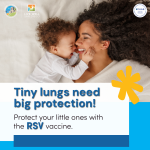
RSV is a common respiratory virus that can be dangerous for babies and some young children. Talk to your doctor about the RSV immunization for babies and toddlers. Give your little ones the strongest start—protection begins with prevention.
Learn more: sandiegocounty.gov/respiratoryviruses
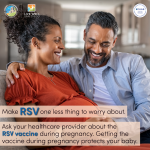
RSV is a common respiratory virus that can be serious for babies. Vaccination during pregnancy or early infancy offers protection when it matters most. Talk to your healthcare provider today about vaccination against RSV.
#SayNOtoRSV #ProtectTinyLungs
Learn more: sandiegocounty.gov/respiratoryviruses
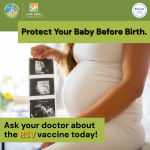
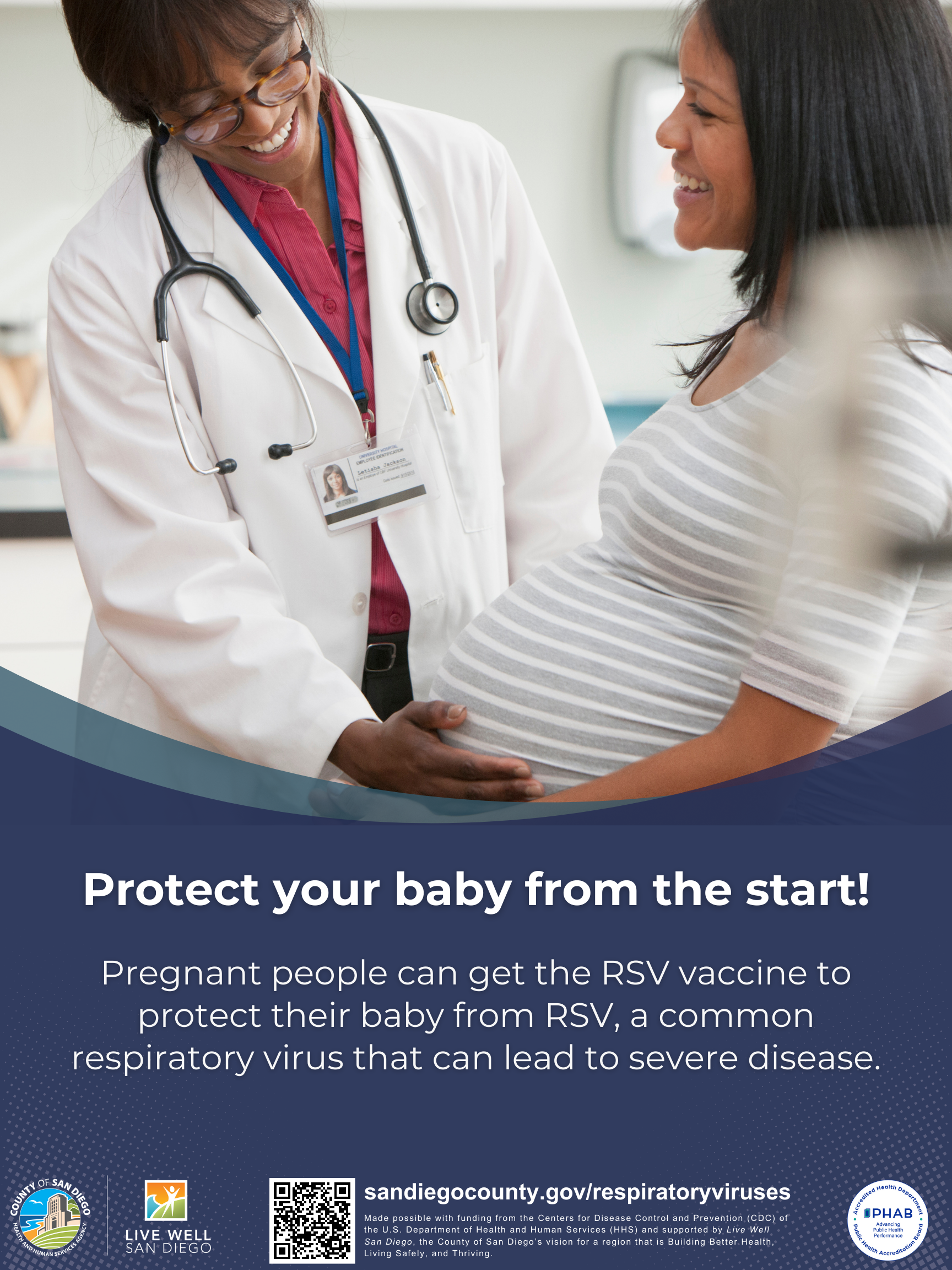
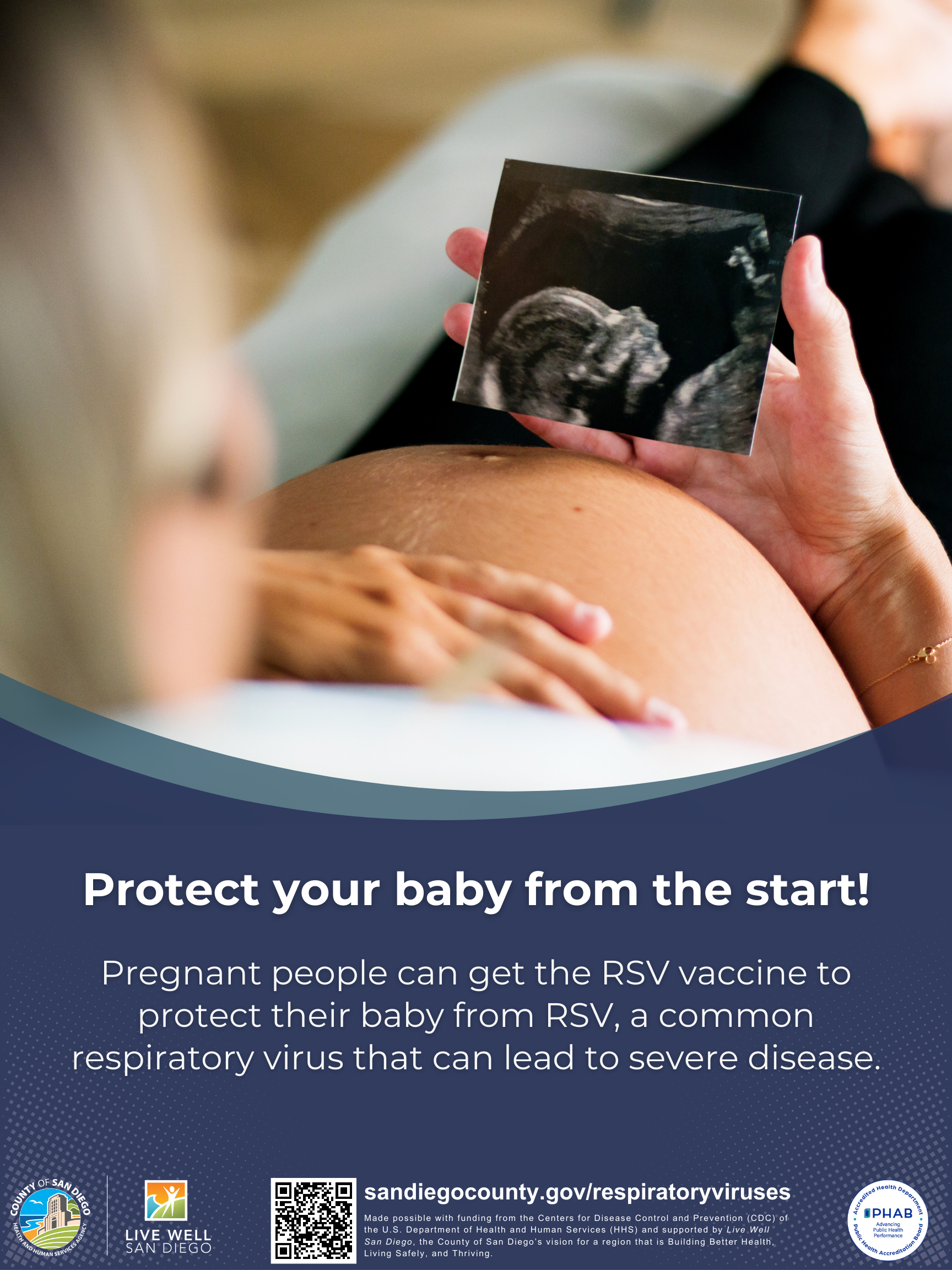
Your baby’s protection starts with you. Getting the RSV vaccine during pregnancy can help shield your newborn from RSV, a respiratory virus that can lead to severe illness. Ask your doctor about the RSV vaccine and keep your baby safe from the start.
Learn more: sandiegocounty.gov/respiratoryviruses
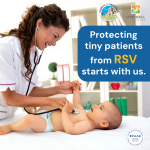
Early conversations about RSV immunizations leads to healthier beginnings. Let’s lead the way in prevention. Educate your patients about maternal and infant RSV immunization options. You play a vital role in protecting newborns—recommend vaccines early and help families make informed, life-saving choices.
Learn more: sandiegocounty.gov/respiratoryviruses
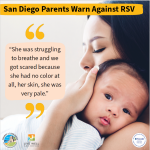
RSV is a common respiratory virus that can be dangerous for infants and young children. Vaccination during pregnancy or early infancy offers protection when it matters most. Talk to your healthcare provider about RSV vaccination - protection begins with prevention.
Learn more: sandiegocounty.gov/respiratoryviruses
Quote from NBC.
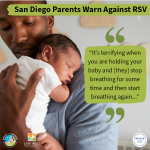
RSV is a common respiratory virus that can be dangerous for infants and young children. Vaccination during pregnancy or early infancy offers protection when it matters most. Talk to your healthcare provider about RSV vaccination - protection begins with prevention.
Learn more: sandiegocounty.gov/respiratoryviruses
Quote from FOX5.
Additional Materials

RSV Communications Toolkit (California Department of Public Health)

Call the Immunization Unit at (866) 358-2966, or send an e-mail, for more information.
 Popular Services