




Residential Food Waste Reduction
Did you know that 40% of the food grown in the United States is never
eaten? This not only wastes the actual food, but all of the time,
energy, water, land, and resources that went into growing it.
Landfills are also a leading cause of greenhouse gas emissions in
California due to methane produced by decomposing food. Residential
waste is a leading source of food waste in landfills, and there’s many
actions you can take on an individual or household level to reduce
food waste.
The Extraordinary Life & Times of a Strawberry
Follow the journey of a strawberry from the farm to the refrigerator to understand all that it takes to bring your food to you. Wasted food is the single largest contributor to landfills in the US—not to mention that it wastes water, labor, fuel, money, & love!
The Wasted Food Scale
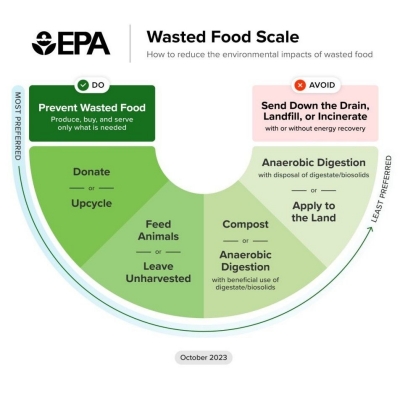
The Environmental Protection Agency (EPA) has created a Wasted Food Scale to prioritize actions that prevent and divert wasted food. While composting is preferable to landfilling, we should consider source reduction and feeding hungry people first.
Below are some ideas to reduce food waste at home that align with the ideals of the Wasted Food Scale.
-
Source Reduction
- Shop Smarter - Use these Smart Shopping Guidelines to reduce the amount of food thrown away at home.
- Meal Planning - By meal planning and shopping with lists, we can make sure we don't overbuy at the store.
- Creative Cooking - If you end up with produce on the edge of spoiling, consider creative ways to use them in cooking.
- Storage Techniques - In order to extend the life of fresh foods in your fridge, learn new storage techniques. Once we get home it's good to know where to store things in the refrigerator and implement the best storage techniques for each food item.
- Learn more food saving and storage techniques for apples, avocados, bananas, beets, berries, broccoli, citrus, corn, onions, peppers, potatoes, spinach, and tomatoes.
- Learn more about how to Save the Food at savethefood.com.
- Learn more information from the EPA's webpage - Preventing Wasted Food Through Source Reduction.
-
Feed Hungry People
- Donate from your Garden. Did you know you can donate the food from your backyard orchard or garden? Gleaning groups will come pick the fruit and veggies for you and donate the food to those in need. Learn more about Gleaning in San Diego!
- Share with your Community. Do you have too much food in your pantry or fridge? Before it goes bad, pass it along to a community member who could use it! Certain online community groups, such as your local Buy Nothing Project group and NextDoor, will often allow you to post gifts of free food for others to request and pick up.
- Food Donation FAQ's / Donaciones de Comida Hechos
- USDA Food Donation Information
- Food Waste Prevention & Donation Newsletter
- For more information on Feeding Hungry People, check out the EPA's Food Donation Basics webpage.
-
Feed Hungry Animals
- Feed Hungry Animals. With proper and safe handling, anyone can donate food scraps to animals. Food scraps for animals can save farmers and companies money. It is often cheaper to feed animals food scraps rather than having them hauled to a landfill. Companies can also donate extra food to zoos or producers that make animal or pet food. There are many opportunities to feed animals, help the environment and reduce costs.
- Share with Pets. If you’re a resident with
pets, consider sharing scraps that you don’t finish with your
animal companion. Be sure to check that your pet can safely eat
certain foods before letting them snack.
- **It is not advised to feed wild animals food scraps.**
- Share with Chickens. There are many benefits to
raising chickens at home. From producing beautiful, high-quality
eggs, assisting in keeping waste out of the landfill, to
protecting your garden from pests - chickens have a lot to
offer! Plus, they are fun pets and are guaranteed to make you
smile. Now that’s something to cluck about!
- Check Solana Center's Upcoming Events for future Backyard Chicken workshops for information about local regulations for keeping backyard chickens, basic requirements for making a home sweet chicken home, feeding and keeping hens healthy and happy, and more.
- For more information on Feeding Hungry Animals, check out the EPA's Reduce Wasted Food by Feeding Animals webpage.
-
Industrial Uses
Food waste can be converted into bio-products and bio-energy through industrial processes.
- Anaerobic digestion breaks down organic waste into biogas and soil amendments. The biogas (or renewable natural gas, RNG) can be used to fuel cars and trucks, or be used in the power grid to power and heat homes. The soil amendment can be used on agricultural lands to boost production. To learn more, watch this video about EDCO's anaerobic digestion, right here in San Diego!
- Wastewater treatment plants are also able to process organic waste via anaerobic digestion, and capture the gases that are released as a form of RNG.
- Fats, oils, and grease (FOG) can be rendered into raw materials to make animal food, cosmetics, soap, and other products. FOGs can also be sent to anaerobic digestion facilities and processed as described above.
-
Composting
- Composting - It's Nature's Black Gold! Compost is called black gold because of its value in improving garden soil. It’s easy to get started composting! Micro-organisms and macro-organisms break down organic materials into compost, or humus, a nutrient-rich soil amendment that improves the health and efficiency of your garden ecosystem from the ground up.
- Compost Workshops - Solana Center for Environmental Innovation hosts free compost workshops and offers composting consultations. For more information on workshop dates and composting how-to's, visit the Solana Center website or contact (760) 436-7986 ext. 700.
- Home Composting Resource Guide - Where to buy worms and related composting items!
- For more information and resources on Composting, visit our Composting Webpage.
-
Local Food Waste Prevention Groups
- San Diego North County Alliance - The North County Food Policy Council meets every other month to address unmet food security needs of North County residents and to improve access to a secure, nutritious, and sustainable food supply and food shed. Learn more about the Council or sign up for meeting notifications.


 Popular Services