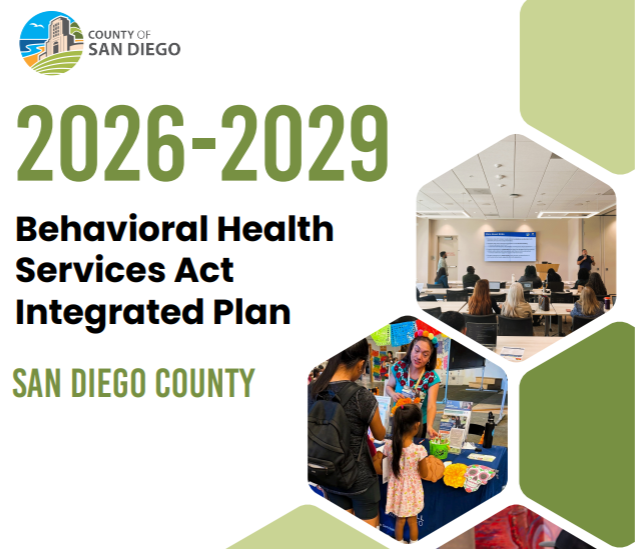
30-Day Public Comment for San Diego County's first BHSA Integrated Plan is open now through April 15, 2026. See Integrated Plan Review & Approval section below for more details.

Behavioral Health Services Act

The Behavioral Health Services Act, also known as BHSA, is a state law passed by voters in March 2024. BHSA updates the Mental Health Services Act (MHSA) by:

  • Expanding service access to include treatment for people with substance use disorders,
  • Prioritizing care for people with the most serious mental illness,
  • Providing ongoing resources for housing and workforce development, and
  • Continuing investments in prevention, early intervention, and innovative behavioral health pilot programs.

BHSA aims to close service gaps and ensure equitable access to quality care across the state. New BHSA requirements will also enhance oversight, transparency, and accountability at the state and local levels. BHSA includes many changes that will impact contracted programs across San Diego County. For more information on changes to contracted programs, visit the BHS Service Network Changes webpage

Community Planning

BHSA requires counties to look at their whole behavioral health system of care through a formal Community Planning Process. The CPP supports the County of San Diego's goal to involve communities in meaningful comversations and devision making about local behavioral health services to ensure programs reflect their unique needs and voices.

By providing your information, you are signing up to receive key information about the BHSA and updates about opportunities to provide input to help inform the BHSA Integrated Plan for 2026–2029.

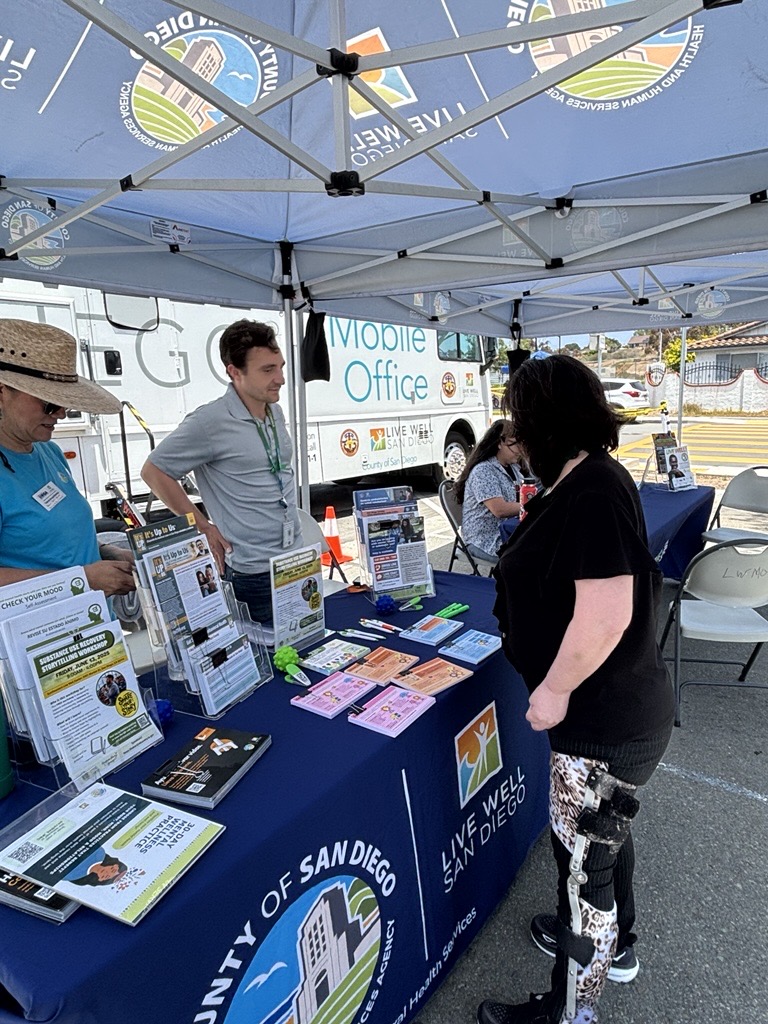
View upcoming  engagement activities hosted by the department, including community workshops, town halls, and input opportunities to help inform the BHSA Integrated Plan for 2026-2029.

Local community members are collaborating with members of San Diego County's Behavioral Health Advisory Board (BHAB) on an ad-hoc subcommittee focused on expanding awareness on BHSA.


BHSA’s CPP process includes enhanced community engagement efforts intended to bring together a broad range of voices to provide input on mental health and substance use services, policies, program planning, implementation, budget allocation, and others.

Counties are required to engage with specific stakeholder groups as part of the CPP. Expand the section below or read the Stakeholder Involvement section in the  Behavioral Health Services Act County Policy Manual  for more details.


Expand All | Collapse All

  • BHSA Stakeholder Groups
    1. Eligible adults and older adults (individuals with lived experience) 
    2. Families of eligible children and youth, eligible adults, and eligible older adults (families with lived experience) 
    3. Youths (individuals with lived experience) or youth mental health or substance use disorder (SUD) organizations 
    4. Providers of mental health services and SUD treatment services 
    5. Public safety partners, including county juvenile justice agencies 
    6.  Local education agencies 
    7. Higher education partners 
    8. Early childhood organizations 
    9. Local public health jurisdictions 
    10. County social services and child welfare agencies 
    11. Labor representative organizations 
    12. Veterans 
    13. Representatives from veterans’ organizations 
    14. Healthcare organizations, including hospitals 
    15. Healthcare service plans, including Medi-Cal Managed Care Plans
    16. Disability insurers (a commercial disability insurer that covers hospital, medical or surgical benefits as defined in Insurance Code section 106, subdivision (b)) 
    17. Tribal and Indian Health Program designees established for Medi-Cal Tribal consultation purposes
    18. The five most populous cities in counties with a population greater than 200,000
    19. Area agencies on aging 
    20. Independent living centers
    21. Continuums of care, including representatives from the homeless service provider community
    22. Regional centers 
    23. Emergency medical services 
    24. Community-based organizations serving culturally and linguistically diverse constituents 
    25. Representatives from youth from historically marginalized communities 
    26. Representatives from organizations specializing in working with underserved racially and ethnically diverse communities 
    27. Representatives from LGBTQIA+ communities 
    28. Victims of domestic violence and sexual abuse 
    29. People with lived experience of homelessness 


The goal of the CPP is to identify unmet needs, service gaps, and the best ways to meet the diverse mental health needs of our community.

The CPP includes the following year-round activities, which create a continuous cycle of feedback and improvement:  


Stakeholder feedback icon

Stakeholder Input & Recommendations: We invite community members, local organizations, and other stakeholders to share their input and recommendations. 

Annual plan update icon

Integrated Plan/Annual Update Draft: The feedback gathered helps shape the department’s BHSA Integrated Plans and Annual Updates.

Public postings, hearings, and approval icon

Public Postings, Public Hearings, & Approval: Once a proposed Plan/Update is drafted, it’s posted publicly for additional input. A public hearing is held at the end of a Public Comment period. The input received is vital to ensuring stakeholders’ perspectives are incorporated into service planning and reflected in updates presented to the San Diego County Board of Supervisors for review and approval.

Plan implementation and monitoring icon

Implementation & Monitoring: Once approved, the plan is submitted to the Department of Health Care Services by June 30, and implementation begins July 1. Stakeholder engagement will continue throughout the year to monitor what's working and where things can be improved.


The insights gained from community feedback help refine future plans and make sure that behavioral health support in our county continues to evolve to meet the needs of our San Diego County residents. 


Integrated Plan Review & Approval

A draft of San Diego County's first BHSA Integrated Plan for fiscal years 2026-2029 is now available for public review and comment March 17, 2026-April 15, 2026.

Click here to download and review the BHSA Integrated Plan draft.

Click here to provide feedback on the BHSA Integrated Plan draft.


Community members, providers, and partners are invited to review the plan and share feedback during the 30-Day public comment period. Input may be submitted via:

Following the 30-Day public comment period, a public hearing will be held with San Diego County's Behavioral Health Advisory Board during the general meeting on May 7, 2026 .

Input received from stakeholders will help inform the final Integrated Plan, which will be submitted to the California Department of Health Care Services once it is approved by the San Diego County Board of Supervisors. All Board-approved Integrated Plans must be submitted to the State by June 30, 2026.


Frequently Asked Questions

See below for frequently asked questions regarding BHSA. If you have a question that is not answered here, please email Engage.BHS@sdcounty.ca.gov.

BHSA Overview

Expand All | Collapse All

  • What is the Behavioral Health Transformation?
    • The State of California is leading an effort to modernize behavioral health, improve accountability, increase transparency, and expand the capacity of behavioral health care facilities. This effort is known as the Behavioral Health Transformation. This effort will implement Prop 1 which includes the Behavioral Health Services Act and the Behavioral Health Bond Act.
    • Behavioral Health Transformation complements and builds on California's other major behavioral health initiatives including, but not limited to:
      • California Advancing and Innovating Medi-Cal (CalAIM) initiative 
      • California Behavioral Health Community-Based Organization Networks of Equitable Care and Treatment (BH-CONNECT) Demonstration proposal
      • Children and Youth Behavioral Health Initiative (CYBHI)
      • Medi-Cal Mobile Crisis
      • 988 expansion
      • Behavioral Health Continuum Infrastructure Program (BHCIP)
    • For more information, visit the Department of Health Care Services webpage.
  • What is BHSA?
    • In March 2024, California voters passed Proposition 1, a two-bill package, to modernize the state’s behavioral health care system. One component of this is the Behavioral Health Services Act (BHSA), which updates the 2004 Mental Health Services Act. BHSA updates funding to support those with the greatest needs, expands the behavioral health workforce to better serve California’s diverse communities, and prioritizes outcomes, accountability, and equity.
  • When does BHSA take effect?
    • New BHSA requirements will be fully implemented by July 1, 2026. However, planning and coordination to prepare for the shift to BHSA is ongoing, including the Community Planning Process to develop the BHSA Three-Year Integrated Plan which officially began in January 2025.
  • What changes will be implemented?
    • Updates allocations for local services and state-directed funding categories.
    • Broadens the target population to include individuals with substance use disorder.
    • Focuses on the most vulnerable and at-risk groups, including children and youth.
    • Advances community-defined practices (community-based practices that have reached a strong level of support within specific communities) as a key strategy for reducing health disparities and increasing community representation.
    • Revises county processes and improves transparency and accountability.
  • How are the components changing from MHSA to BHSA?
    • MHSA funding included five components: Community Services and Supports, Prevention and Early Intervention, Innovation, Capital Facilities and Technology Needs, and Workforce Education and Training.
    • BHSA has three funding categories and each has a required percentage allotment of funding: Behavioral Health Services and Supports (35%), Full-Service Partnerships (35%), and Housing Interventions (30%).
    • Under BHSA, population-based prevention moves under State management, as well as a statewide workforce initiative. The State’s allocation increases to 10% from the previous 5% and this will include: 3% for administration, 3% for the statewide workforce initiative, and 4% for population-based prevention.


Contract Changes

Expand All | Collapse All

  • Will contracted services change as the County implements BHSA?
    • Behavioral Health Services is comprehensively assessing the service continuum, including programs funded through other funding sources to align the entire system of care with State priorities under Behavioral Health Transformation, including BHSA.
    • The service assessment focuses on revenue sustainability and ensuring we are funding core programs that align with our statutory requirements as a specialty behavioral health plan. 
  • When will contracted service providers know if their contract will sunset in the transition from MHSA to BHSA?
    • Notifications are being sent to contracted providers on a rolling basis beginning in October 2025 leading up to the July 1, 2026 BHSA implementation. BHS aims to provide as much notice as possible regarding the sunset of any contracts regardless of which MHSA component it falls within.


Stakeholder Engagement

Expand All | Collapse All

  • What types of activities will be conducted as stakeholder engagement?
    • Stakeholder engagement involves gathering input from providers, local partners, and residents with unique perspectives across San Diego County through various engagement activities such as listening sessions, focus groups, key informant interviews, workgroups and committees, community trainings, education and outreach, and more. 
  • What focus areas will stakeholders be involved in?
    • BHSA requires counties to involve stakeholders in discussions around mental health and substance use disorder policy, program planning and implementation, monitoring, workforce, quality improvement, health equity, evaluation, and budget allocation.
    • In addition, based on learning from previous engagement efforts, Behavioral Health Services is expanding opportunities to discuss specific topics including accessibility, care coordination and navigation, community outreach and education, crisis response services, culturally appropriate and affirming care, support for people experiencing homelessness, services for youth and transition age youth, and workforce capacity and diversity.
  • Will the 30-day Public Comment Period change?
    • No. Under BHSA, counties are still required to provide a 30-day minimum public comment period for their Integrated Plans or Annual Updates. Counties will also continue to conduct Public Hearings on the draft of Integrated Plans or Annual Updates at the close of 30-day public comment periods.


Prevention and Early Intervention

Expand All | Collapse All

  • What happened to Prevention and Early Intervention funding?
    • Under BHSA, Prevention funding and services will shift to the California Department of Public Health (CDPH) using a portion of the State’s 10% BHSA allocation. CDPH will use the funding to implement population-based behavioral health prevention strategies.
    • Early intervention services may continue to be funded at the local level through the Behavioral Health Services and Supports (BHSS) component, if they align with BHSA requirements and priorities.
  • How will the State CDPH use BHSA Prevention funds?
    • A minimum of 4% of BHSA funds will be directed to CDPH for population-based mental health and substance use disorder (SUD) prevention programs.
    • CDPH has completed community feedback gathering for the Phase 1 and Phase 2 BHSA Population-Based Prevention Program Guides. When finalized these guides will comprise the CDPH final plan that will guide implementation of the BHSA Statewide Population-Based Prevention Program for fiscal years 2026–29. 
    • The final plan from CDPH is currently pending but based on the Phase 2 Guide, CDPH has proposed the following: 
      • Have funding available to mobilize local reach of statewide strategies and policy in the form of grants for CBOs and Tribes.
      • Support statewide policy initiatives on emerging behavioral health issues. 
      • Establish statewide prevention strategies that leverage existing plans and initiatives.
      • Leverage existing public awareness campaigns (e.g., Never a Bother) and develop new ones on suicide and self-harm, 988 and crisis services, and substance use disorder prevention. 
      • Provide training and technical assistance in specialized areas. 
    • To learn more about the Population-Based Prevention Program and to view the Phase 1 and 2 guides, visit the CDPH website.
  • How will the County use Early Intervention funds?
    • BHSA Early Intervention focuses on proactive approaches to identify and address behavioral health conditions early on to prevent them from getting worse. This category includes services for individuals experiencing a behavioral health crisis, mental health and substance use treatment services, and evidence-based practices for individuals experiencing a first-episode of psychosis.
  • What are the requirements and goals of county-level Early Intervention programs under BHSA?
    • Counties must offer Early Intervention programs under the Behavioral Health Services and Supports (BHSS) category.
      • 51% of BHSS funds will be dedicated to early intervention programs. These services may include targeted outreach, screenings, access and linkage, and treatment services for individuals of all ages. 
      • Of those BHSS early intervention funds, 51% will be dedicated to children, youth and young adults 25 and under.
    • The goal of County Early Intervention programs is to stop mental health conditions and substance use disorders from becoming severe and disabling and reduce behavioral health disparities. These programs identify and address behavioral health concerns early, to reduce adverse outcomes in alignment with State behavioral health goals, which include: 
      • Suicide and self-harm
      • Incarceration
      • School Failure or disciplinary actions
      • Unemployment
      • Prolonged suffering
      • Homelessness
      • Family Separation
      • Overdose
      • Mental illness in children and youth 
  • How is Early Intervention under BHSA different from Prevention and Early Intervention under MHSA?
    • Under BHSA, population-based prevention services previously funded under Prevention and Early Intervention (PEI) are now managed at the State level. Early Intervention services administered by the County are now more focused on providing evidence-based services that are sustainable and integrated with intensive treatment services as part of a comprehensive continuum that aligns with State requirements and priority populations. BHS will continue administering substance use prevention services, as these have dedicated funding through Substance Use Block Grants (SUBG). 


BHSA Requirements

Expand All | Collapse All

  • Are there any exemptions to BHSA mandates available to Counties?
    • All counties may request to transfer of up to 7% of funds out of any one component into another. A maximum of 14% of funds can be transferred between components. Any transfer requests must be approved by the County Administrative Officer and submitted to DHCS for approval by March 31, 2025. 
    • Small counties (population under 200,000) are eligible for a number of exemptions that do not apply to San Diego County (population 3.3 million).
    • There are some exemptions available to large counties. 
      • For the first Integrated Plan covering fiscal years 2026-29, all counties, regardless of their size, are exempt from the EBP fidelity requirements for ACT, FACT, IPS Model of Supported Employment, and HFW. Counties do not need to request this exemption in their first Integrated Plan. 
      • Beginning with the 2032-35 IP, larger counties may request exemptions from one or more of the following Housing requirements, if looking to transfer more than the allowable 7%:
        • 30 percent of the BHSF funds distributed to the county for Housing Interventions services.
        • 50 percent of the county’s Housing Interventions funds on those who are chronically homeless.
        • No more than 25 percent of Housing Interventions funds on capital development projects. 
    • Further details on requirements for transfers and exemptions can be found in the DHCS BHSA County Policy Manual.  


Updated 3/17/26

Past Engagement Activities

Behavioral Health Services (BHS) is dedicated to conducting meaningful engagement opportunities and bi-directional dialogues with stakeholders. This includes capturing community recommendations and sharing key learnings from recent activities conducted by the department. We invite you to review recent BHSA Engagement Summaries. Summaries are also listed in the appendices of the BHSA Integrated Plan.

To help you navigate the BHSA Engagement Summaries, please review the Table of Contents to identify the starting page of each engagement listed. Please review the table below to access materials from each of these engagements.


Date(s) Priority Area(s) & BHSA Stakeholder Group(s) Discussion Focus

Feb 9 18, 2026

Feb 11, 2026

Feb 19, 2026

Feb 23, 2026

Mar 04, 2026

Culturally Appropriate and Affirming Care; Community Outreach and Education

Report back to Regional Community Leadership Team Meetings to share about BHSA, upcoming 30 day comment period, key learnings, and audience recommendations.

BHSA Informational Handout

BHSA Update: South Region

BHSA Update: North Central Region

BHSA Update: East Region

BHSA Update: Central

BHSA Update: North County Region


Representatives from organizations specializing in working with underserved racially and ethnically diverse communities
Dec 18, 2025 Victims of domestic violence and sexual abuse

Discussions with Survivors of Domestic Violence/Sexual Assault & Support Providers in person at One Safe Place North and South to inform the BHSA 2026-2029 Integrated Plan draft. Stakeholder feedback and recommendations about SUD treatment service providers on BHSA statewide population behavioral health goals.

Activity Materials

Dec 16, 2025 Victims of domestic violence and sexual abuse

Discussion virtually with Survivors of Domestic Violence/Sexual Assault & Support Providers to inform the BHSA 2026-2029 Integrated Plan draft. Stakeholder feedback and recommendations about SUD treatment service providers on BHSA statewide population behavioral health goals.

Activity Materials

Dec 11, 2025 Providers of mental health services and substance use disorder treatment services

Discussion with Alcohol & Drug Services Provider Association (ADSPA) to inform the BHSA 2026-2029 Integrated Plan draft. Stakeholder feedback and recommendations about SUD treatment service providers on BHSA statewide population behavioral health goals.

Activity Materials

Dec 9, 2025 Early childhood organizations

Discussions with stakeholders related to “Early Intervention” were held to inform BHSA 2026-2029 Integrated Plan Draft. Feedback and recommendations focused on early intervention, prevention, youth mental wellness, and solutions that can strengthen community stability given BHSA statewide population behavioral health goals

Activity Materials

Youths (individuals with lived experience) or youth mental health or substance use disorder organizations
Dec 5, 2025 Providers of mental health services and substance use disorder treatment services

Discussions with San Diego State University (SDSU) School of Social Work Masters of Social Work (MSW) Training Program related to “Behavioral Health workforce” were held to inform BHSA 2026-2029 Integrated Plan Draft. Feedback and recommendations to strengthen the behavioral health workforce through recruitment and training, and solutions that can strengthen community stability given BHSA statewide population behavioral health goals

Activity Materials

Higher education Partners
Health care organizations, including hospitals
Dec 3, 2025 Providers of mental health services and substance use disorder treatment services

Discussions with stakeholders related to “Behavioral Health Workforce” were held to inform BHSA 2026-2029 Integrated Plan Draft. Feedback and recommendations about how to strengthen the behavioral health workforce through recruitment and training, and solutions that can strengthen community stability given BHSA statewide population behavioral health goals.

Activity Materials

Health care organizations, including hospitals
Community-based organizations serving culturally and linguistically diverse constituents
Nov 20, 2025 Providers of mental health services and substance use disorder treatment services

Discussion with Integrated Health Partners of Southern California (IHP) Behavioral Health Workgroup with federally qualified health centers (FQHCs)/Community Health Centers (CHCs) were held to inform BHSA 2026-2029 Integrated Plan Draft. Feedback, recommendations, and solutions that can strengthen community stability given BHSA statewide population behavioral health goals.

Activity Materials

Health care organizations, including hospitals
Health care service plans, including Medi-Cal Managed Care Plans (MCPs)
Nov 19, 2025 Providers of mental health or substance use disorder treatment services

Discussions with stakeholders related to “Substance Use Disorder Services” were held to inform BHSA 2026-2029 Integrated Plan Draft. Feedback and recommendations about how prevention, treatment, and recovery supports that promote wellness and long-terms recovery can strengthen community stability given BHSA statewide population behavioral health goals

Activity Materials

Community-based organization serving culturally and linguistically diverse constituents
Nov 17, 2025 Local education agencies

Behavioral Health Services (BHS) joined the San Diego County School Boards Association (SDCSBA) to host an informational session about services offered from the County of San Diego, BHS. This included a brief overview of Behavioral Health Service Act's (BHSA) 2026-2029 Integrated Plan introducing online ways for audience members to participate in future session and/or offer online feedback.  

Activity Materials

Nov 12, 2025 Continuums of care, including representatives from the homeless service provider community

Discussions with stakeholders related to “Housing Interventions” were held to inform BHSA 2026-2029 Integrated Plan Draft. Feedback and recommendations about how housing, homelessness prevention and behavioral health supports intersect, and solutions that can strengthen community stability given BHSA statewide population behavioral health goals.

Activity Materials

Providers of mental health or substance use disorder treatment services
Community-based organization serving culturally and linguistically diverse constituents
Nov 4, 2025 Eligible adults and older adults (individuals with lived experience)

Discussions with stakeholders related to “Crisis Services” were held to inform BHSA 2026-2029 Integrated Plan Draft. Feedback and recommendations about how crisis response and services can better connect people to care, reduce repeat hospitalizations, and improve safety and stabilization outcomes, and solutions that can strengthen community stability given BHSA statewide population behavioral health goals.

Activity Materials

Continuums of care, including representatives from the homeless service provider community
People with lived experience of homelessness
Area agencies on aging
Local public health jurisdictions
County social services and child welfare agencies
Providers of mental health services and substance use disorder treatment services
Families of eligible children and youth, eligible adults, and eligible older adults (families with lived experience)
Community-based organizations serving culturally and linguistically diverse constituents
Representatives from organizations specializing in working with underserved racially and ethnically diverse communities
Oct 30, 2025 Providers of mental health services and substance use disorder treatment services

Discussion with Caregivers Coalition of San Diego to inform BHSA 2026-2029 Integrated Plan draft; stakeholder feedback and recommendations about access and support for older adults and people with disabilities on BHSA statewide population behavioral health goals

Activity Materials
Health care organizations, including hospitals
Health care service plans, including Medi-Cal Managed Care Plans (MCPs)
Oct 27, 2025 Providers of mental health services and substance use disorder treatment services


Discussion with Behavioral Health Advisory Board (BHAB) Re-entry Support for Justice-Involved Youth and Adults Subcommittee to gather input about behavioral health supports for people who are at risk of or have had justice involvement, including early outreach, care coordination, housing, recovery, and ongoing engagement, to inform BHSA 2026-2029 Integrated Plan draft

Activity Materials


Health care organizations, including hospitals
Health care service plans, including Medi-Cal Managed Care Plans (MCPs)
Oct 24, 2025 Eligible adults and older adults (individuals with lived experience) 

Discussion with stakeholders at the Consumer Feedback Town Hall with NAMI San Diego to gather public comment and feedback regarding BHSA in San Diego County. The County of San Diego provided a brief overview of BHSA followed by an open discussion guided by designated questions to inform BHSA 2026-2029 Integrated Plan draft

Activity Materials

Families of eligible children and youth, eligible adults, and eligible older adults(families with lived experience)
Oct 22, 2025 Multi-Sector


Behavioral Health Services (BHS) joined hundreds of community partners at the 10th Annual Live Well Advance Conference & School Summit and hosted a breakout session to share information about the Behavioral Health Services Act (BHSA) and gather input from participants to inform the BHSA 2026–2029 Integrated Plan draft

Activity Materials


Oct 17, 2025

Providers of mental health services and substance use disorder treatment services

Discussion with the  Hospital Association of San Diego & Imperial Counties (HASD&IC) Behavioral Health Workgroup to gather hospital stakeholder input on changes with MHSA transitioning to BHSA and needed services for clients covered under them as the MHP to inform the BHSA 2026–2029 Integrated Plan draft.

Activity Materials

Health care organizations, including hospitals
Health care service plans, including Medi-Cal Managed Care Plans (MCPs)
Oct 16, 2025 Providers of mental health services and substance use disorder treatment services

Discussion with stakeholders at the Healthy San Diego Behavioral Health Operations Subcommittee meeting to gather input on improving access, equity, care coordination, and shared outcomes, while identifying opportunities for stronger collaboration between County and MCP services, to inform the BHSA 2026–2029 Integrated Plan draft.

Activity Materials

Health care organizations, including hospitals
Health care service plans, including Medi-Cal Managed Care Plans (MCPs)
Oct 13, 2025

Care Coordination and Navigation; Community Outreach and Education


Discussion with Behavioral Health Advisory Board (BHAB) Pathways to Continuum of Care for Children, Youth, and Adults Impacted by Alcohol and Other Drugs Subcommittee to gather input on gaps, barriers, and strategies to strengthen access and engagement across the substance use disorder (SUD) continuum of care and inform BHSA 2026-2029 Integrated Plan draft


Families of eligible children and youth, eligible adults, and eligible older adults (families with lived experience); Providers of mental health services and SUD treatment services

Oct 1, 2025 Community-based organizations serving culturally and linguistically diverse constituent

BHS Data Presentation for LWSD South Region Community Leadership Team meeting focused on mental health and substance use population health data, including regional data on suicide and overdose trends; community input to inform BHSA 2026-2029 Integrated Plan draft, including stakeholder feedback and recommendations  BHSA statewide population behavioral health goals

Activity Materials

Providers of mental health services and substance use disorder treatment services
Youths
Aug 14, 2025 Culturally Appropriate and Affirming Care; Accessibility; Community Outreach and Education

Discussion with California Pan-Ethnic Health Network (CPEHN) and the  San Diego Refugee Communities Coalition  (SDRCC) about behavioral health needs and challenges for refugee communities to inform BHSA 2026-2029 Integrated Plan draft; stakeholder feedback and recommendations on  BHSA statewide population behavioral health goals

Activity Materials

Representatives from organizations specializing in working with underserved racially and ethnically diverse communities 

Aug 13, 2025

Services for youth and transition age youth

Discussion with NAMI Caregivers & Family members about their experience supporting youth access behavioral health resources to inform BHSA 2026-2029 Integrated Plan draft and development of a Children, Youth, and TAY Behavioral Health Continuum Framework (Youth Optimal Care Pathways ( Youth OCP Model ) for San Diego County    


Families of eligible children and youth, eligible adults, and eligible older adults

Aug 12, 2025 Services for Youth and Transition Age Youth

Discussion with American Academy of Pediatrics San Diego & Imperial Counties (AAP-CA3) about their Strategic Behavioral Health Initiative (SBHI) and SBHI Framework and Recommendations to inform the development of a Youth OCP Model for San Diego County and BHSA 2026-2029 Integrated Plan draft 

Activity Materials 

Early childhood organizations
Aug 7, 2025

Support for People Experiencing Homelessness

Continued discussion with BHS Housing Council members on housing policies, cultural responsiveness, and priorities to inform BHSA 2026-2029 Integrated Plan draft 

Activity Materials

Continuums of care, including representatives from the homeless service provider community

Jul 9, 2025

Jul 17, 2025 

Jul 28, 2025 

Sept 3, 2025

Community Outreach and Education; Suicide Prevention; Substance Use and Overdose Prevention

Review of mental health and substance use population health data, including regional data on suicide and overdose trends; community input to inform BHSA 2026-2029 Integrated Plan draft, including stakeholder feedback and recommendations on  BHSA statewide population behavioral health goals  

Activity Materials - North Central Community Leadership Team 

Activity Materials - East Community Leadership Team 

Activity Materials - Central Community Leadership Team 

Activity Materials - North County Community Leadership Team  

Providers of mental health services and SUD treatment services; Public safety partners, including county juvenile justice agencies, education/higher education partners, community and faith-based organizations
Jun 4, 2025 Services for Youth and Transition Age Youth

Discussion with Live Well San Diego Youth Sector about youth and transition age youth (TAY) behavioral health needs to inform BHSA 2026-2029 Integrated Plan draft and development of a Children, Youth, and TAY Behavioral Health Continuum Framework (Youth Optimal Care Pathways (Youth OCP) Model) for San Diego County 

Activity Materials

Representatives from youth from historically marginalized communities
May 15, 2025 Crisis Response Services; Community Outreach and Education

Community workshop and resource fair at MAAC Center in Chula Vista featuring a panel with ACL/988 ,  MCRT Program , SBCS , and Survivors of Suicide Loss ; input on behavioral health needs and challenges for South Bay communities and desired future community workshops 

Activity Materials 

Community-based organizations serving culturally and linguistically diverse constituents
May 1, 2025 Support for People Experiencing Homelessness

Discussion with BHS Housing Council members on housing policies, cultural responsiveness, and priorities to inform BHSA 2026-2029 Integrated Plan draft 

Activity Materials 

Continuums of care, including representatives from the homeless service provider community

Apr 29, 2025 

Apr 30, 2025 

Community Outreach and Education; Crisis Response Services

Overview of behavioral health crisis response resources including Access and Crisis Line (ACL)/988 , Crisis Stabilization Units (CSUs ), and Mobile Crisis Response Team (MCRT) Program ; community input to refine outreach and messaging efforts for these services 

Activity Materials 

Providers of mental health services and SUD treatment services; Public safety partners, including county juvenile justice agencies, education/higher education partners, community and faith-based organizations
Oct 28, 2024 Culturally Appropriate and Affirming Care; Community Outreach and Education

Discussion with Live Well San Diego Central Community Leadership Team about behavioral health needs and challenges for Black/African American communities; community input to inform outreach and public messaging campaigns for Black/African American adults 

Activity Materials

Representatives from organizations specializing in working with underserved racially and ethnically diverse communities

Not sure where to start?

Call or text 9-8-8 or dial 1-888-724-7240 to speak to someone who can help find the right service for you or someone you care about. Both numbers are operated 24 hours a day, 7 days a week with support available in over 200 languages. For more information visit Get Help Now or All Services. If you are experiencing an emergency, please call 9-1-1.